
By Alex J. Schorr
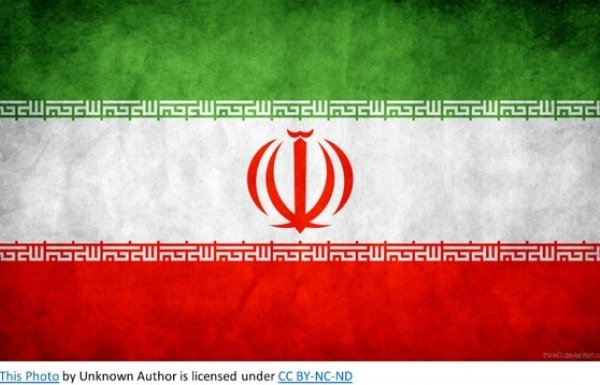
April 9, 2026 — As of yesterday, the United States and Iran have agreed to a fragile two-week ceasefire brokered by Pakistan, with the agreement aiming to pause hostilities that began on February 28. Pakistan-mediated talks are scheduled to begin in Islamabad on Friday April 10, to seek a permanent settlement. The fragile cease-fire comes after Trump posted a threat on social media Tuesday stating that a “whole civilization will die tonight” unless Iran reopened the Strait of Hormuz.
Additionally, a big point of contention has also emerged concerning Lebanon. While Pakistan and Iran maintain that the truce includes “Lebanon and elsewhere,” Israeli Prime Minister Benjamin Netanyahu and President Trump have stated that the ceasefire does not cover Lebanon, where Israel has significantly intensified its attacks against Hezbollah.
Negotiations are expected to focus on two different frameworks:
- Iran’s 10-Point Plan: Includes demands for a full US military withdrawal from the region, the lifting of all sanctions, and compensation for war damages.
- US 15-Point Plan: Prioritizes the permanent ending of Iran’s nuclear enrichment program and the decommissioning of nuclear facilities.
Despite the agreement, hostilities have persisted, with reports of continued attacks in the Persian Gulf and accusations from both sides of ceasefire violations. Also, Iranian state TV said a first vessel had transited the global oil checkpoint with Tehran’s permission following a ceasefire, but shipping sources said that the Iranian navy was threatening ships with destruction if they tried to pass.
The Strait of Hormuz accounts for roughly 20% of the world’s total oil supply. As a strategic chokepoint between the Persian Gulf and the Gulf of Oman, it is the primary export for major producers, including Saudi Arabia, Iraq, Kuwait, the UAE, and Iran. Despite President Trump backing off of his threat to annihilate Iran, the strait is still closed.
The Motives for War
There is such a thing as a “war of necessity,” but as Senator Warner from Virginia says: “This one in Iran is a war of choice.” He would know that, as he is the top democrat on the senate intelligence committee, and stated that “there was no imminent threat from Iran that would justify the United States initiating military action,” and that there was “no available intelligence that showed an immediate threat to our country.”
Warner is not just reflecting on the concerns of Americans overall: he is illustrating the concerns of his own state: Virginia is home to the Naval Station at Norfolk, where thousands of military families will be directly impacted by this illegal war. There are already thousands of navy men and women aboard the USS Gerald Ford, which was shipped out to Norfolk earlier in the summer, and are already in the Middle East. Warner himself is just one of many representing those concerned about the deployment of Americans into a war that was uncalled for and unconstitutionally designed.
Add the financial cost to the human cost to this equation, where so many Americans are already struggling in the homeland of the United States. Billions of dollars will be put into this conflict, all while the nation prides itself on being the best country and the richest country, when its own people are unable to afford basic expenses.
President Trump cannot give a clear explanation behind this military action. Initiating a military assault on another country puts the people in the United States in a very uncertain and dangerous position.
The War’s Impact on the Economy
Trump has now broken what may be the last promise that he made in his campaign in starting another war. Compare this with certain members of the MAGA movement, who asserted that it was apparently un-pratriotic to fight for or send aid to Ukraine— pro democracy allies— and now spending almost a billion dollars a day to either liberate or not liberate Iran from its own cruel leadership; a sentiment which this foreign country has never asked for.
It was barely a year ago that Vice President J.D. Vance said that Ukraine was draining our supplies faster than we could replenish them, while saying at the exact same time that the US couldn’t afford to defend Ukraine, which at its peak was costing $4–5 billion a month, while right now, the war in Iran is set to cost $27 billion per month. For a comparison, the war in Iraq cost about $300 million per day. This means that from day one of the US conflict against Iran, Trump’s war on Iran is costing America triple the cost of the worst days in Iraq. Trump is now debt spending.
As of April 8, 2026, the US has spent an estimated $33 billion on direct military operations in the conflict with Iran— also known as “Operation Epic Fury” by the Trump administration.
United States Oil prices surged above $104 per barrel for the first time since July 2022, which is about an increase of 90%. Gasoline prices have gone up more than 33% over the last 40 days. The promised yet obviously absent “Doge compensation check” and $2,000 tariff rebate check” have yet to be even admitted to American families and workers to even lessen the pain facing Americans.
Despite Trump saying that Americans would be getting gas for less than $2 a gallon.
Now, gas prices are closing in on $3.50 a gallon and are expected to continue to keep rising the longer the Middle East conflict lasts. Despite that, Trump is down playing the issue. The latest talking point to rectify this has been to characterize financial woes as a “short-term pain for a long-term gain.”
Global stock markets surged and crude oil dropped significantly— falling below $100 per barrel in response to the news, but it is likely and expected to change and fluctuate based on the status of the US and Iran conflict.
Every Republican president since Ronald Reagan does this: promise to lower taxes, and does so for the very rich while increasing it for the poorer and middle class, and then attack a middle-western country. The difference between Trump and those who preceded him is that he ran as the “anti-war president,” with promises of no more “forever wars” or regime changes internationally.
The Iran Animosity is our Frankenstein
Republican president Dwight Eisenhower helped start up Iran’s nuclear program in the 1950s— in fact, it was America that helped build Iran’s first nuclear reactor in 1967 on the campus of Tehran University, as well as providing fuel for that reactor and weapons-grade enriched uranium. Soon after, America was then giving weapons to Iran during the Iran Contra Affair under Republican president Ronald Reagan.
In 2015, America and five other countries signed the Iran Nuclear Deal, which limited Iran’s nuclear program, lifted sanctions, and unfreezed many of their assets, which was reported to be $50 billion. That was before Trump, during his first term, upended the Nuclear Deal, adding to the animosity and irresponsibility for potential international violence from the authoritarian controlled country.
President Trump bombed seven countries in 2025. Bush at least went to congress for constitutional approval, but under Trump the Iran war is completely illegal and unprovoked. This was done for a war of choice that has already cost American lives, jets, and depleted ammunition stockpiles that were supposed to be set aside for real emergencies in favor of a war that was supposed to last just “a few days,” which may last “four to five weeks,” or even a full invasion, though at this time, no one knows.
We are not getting the complete picture.
3,600 Iranians have been killed since the beginning of the Iran War in February1,607. Of those killed were civilians, including at least 244 children. Israel has additionally killed 1,368 people since early March, including 124 children. According to Reuters, however, international humanitarian groups like the Red Cross estimate that at least 1,900 people have been killed specifically by the US and Israeli strikes inside Iran alone.
The US Pentagon and the US Central Command (CENTCOM) officially confirmed that about 15 service members have been killed. 6 deaths occurred in a KC-135 refueling aircraft crash in Western Iraq on March 12, 6 to 7 deaths resulted from an Iranian drone strike on a civilian port in Kuwait on March1. There was one reported death— Sergeant Benjamin Pennington— following an attack on the Prince Sultan Air Base in Saudi Arabia. There have been between 300 to 538 wounded service members. Reporting from The Intercept and WION suggests official numbers may be under-reported, with some estimates alleging hundred or even more than 700 deaths.
Within Israel, people are not getting complete and accurate information as to the condition and status of how the war with Iran is going, including the impact of damage and lives lost as a result of missile retaliation from Iran. There is heavy censorship by the Israeli government as to the available images and video footage regarding Iran’s own missiles landing in Israel and its subsequent damage.
Israeli citizens are being threatened with prison time if they record a video of devastation inside of Tel Aviv, and if that footage makes its way to media outlets outside of Israel. They are not getting full and accurate information as to the devastation that Iran itself has wrought on Israel itself and subsequent US military bases in the region.
We are not getting information of this nature in the U.S. either. This censorship echoes what is transpiring in the United States, because there is heavy censorship here as well.
FOX News is cheerleading the war, claiming that Trump has apparently already won the war, calling it the best action ever under “any president.” CNN, knowing that they are consigned to the control of Bari Weiss, and because of Ellison’s acquisition of Warner Brothers Discovery (and CNN’s parent company,) have been espousing war expert after war expert, following in a similar vein to FOX. There is very little in typical mainstream American media where there is footage that has been highlighted on social media platforms like TikTok and Instagram of missiles entering Israel and televised and causing tremendous damage, nor is there any footage of damage being done to US Military bases.
Certain sources claim that some Gulf Region US military bases have been destroyed by Iran’s retaliation against the US killing its Ayatollah and family members, as well as its school of — children. We are not seeing any of that here in the US.
Context for US soldiers and veterans
Post 9-11 veterans have a 41% disability rate compared to only 25% for veterans overall. That figure for those impacted by the Vietnam war was only 16%. That is not because the Middle East is “more dangerous” than Vietnam, but because the advances of technology and culture in America became much better overall and overtime for treating battlefield injuries.
This is good, but it also increases the long-term cost of war. Since 2004, the cost of income security for veterans rose 419% from $31 billion to $161 billion by 2024. This has occurred while the VA healthcare spending has increased by almost 600% in that period of time from $24 billion a year to $139 billion.
Since 2000, the number of veterans on VA care has tripled from 1.3 million to 3.6 million Americans, all despite the Korean War, The Vietnam War, and the Gulf War.
From 1980 to 1999, the budget stayed almost flat, but that same budget has almost tripled in the 25 years since.
When you combine pay, healthcare, retirement, and benefits, as well as the budget’s for defense and the VA, almost 60% of all military spending today is just on the people working for the military. On the current trajectory of America’s attitude on the military alone, by 2039, the Defense Department’s budget will be mostly consumed by personnel— that is, if nothing changed, and nothing got worse.
That was until Pete Hegseth, a former weekend news anchor, ordered a 20% reduction in the seniormost leadership positions in the military, following the firing of General C. Q Brown, the Joint Chiefs Chairman, the retirement of Air Force Chief of Staff General David Allvin, the firing of Director of the NSA and Cybersecurity Command General Timothy Haugh, and the firing of top admiral in the navy Admiral Lisa Franchetti. These people were all senate confirmed, and everyone of them was removed by Pete Hesgeth mid-appointment and without cause.
Additionally, back in March 2026, FBI Director Kash Patel ordered the firing of nearly a dozen agents from CI-12, a specialized counterintelligence unit responsible for monitoring threats from Iran and the Middle East. Congressional leaders, including members of the House Homeland Security Committee, have formally questioned whether these personnel changes have left the US more vulnerable to foreign retaliation.