
By Karen Pearlman
April 21, 2026 (La Mesa) — When he was a teenager growing up in Muncie, Indiana, Charles Hamori performed his first successful medical diagnosis — on himself.
Hamori was 14 when he correctly identified his own appendicitis, and it was at that moment (or soon thereafter) a doctor was born.
“With my first diagnosis of appendicitis, my mom ignored it and my sister cried wolf,” Hamori said, laughing. “But what I remember most about that is that many times, most times, your patients are going to tell you what they have, what’s wrong, if you take the time to listen. That (appendicitis incident) influenced how I listen to my patients today.”
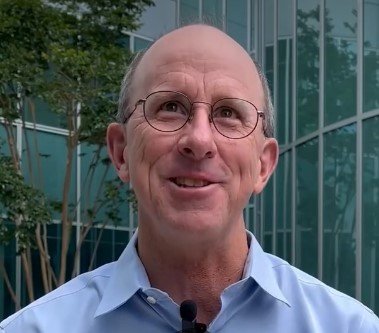
With nearly 30 years at Kaiser Permanente as a physician and surgeon under his medical belt, Dr. Charles J. Hamori, a Mount Helix resident, has reached one of the true pinnacles of American medical leadership.
Dr. Hamori, a long-time internal medicine doctor at Kaiser Permanente’s Rancho San Diego Medical Offices and who practices at Kaiser offices in La Mesa and Bostonia (El Cajon), was officially named Chair of the Board of Regents for the American College of Physicians (ACP).
The ACP honor
The merit-based appointment, announced at the conclusion of the ACP’s Annual Internal Medicine Meeting in San Francisco last weekend, placed Dr. Hamori at the helm of the largest medical specialty organization in the United States.
The ACP represents more than 160,000 internal medicine physicians, subspecialists and medical students across 172 countries. The ACP is the second-largest physician group in the country, trailing only the American Medical Association.
As Chair of the Board of Regents, Dr. Hamori will have a growing slate of national responsibilities, and will take a leave of absence from Kaiser Permanente but do some per diem work.
Dr. Hamori said he will focus on leading the primary policy-making body for the organization. He said he is focused on some of the biggest challenges facing doctors in 2026, including declining reimbursements and insurance coding challenges.
The ACP and related industry experts report that physicians, particularly in primary care and internal medicine, are facing significant financial challenges because of declining insurance reimbursements, which are often not keeping pace with inflation or practice operating costs. These challenges are leading to burnout and impacting patient access to care, according to the groups.
“Patients get caught in the middle,” Dr. Hamori said.
The role is a culmination of Dr. Hamori’s decades of service.
Since 2007, Dr. Hamori has been a Fellow of the American College of Physicians (FACP), a peer-reviewed mark of distinction.
He also served as the Governor of the ACP’s California Southern Region III from 2017 to 2021. During his tenure as governor, he was a staunch advocate for both patients and providers. He frequently traveled to Sacramento to meet with legislators, championing initiatives like the “Patients Before Paperwork” campaign and supporting mental health resources for physicians.
Dr. Hamori’s leadership earned the regional chapter the prestigious John Tooker Evergreen Award in 2021 for “The DEI Shift,” an award-winning podcast focusing on diversity, equity and inclusion in medicine.
Some background
After graduating from Stanford University and a brief stint in biotechnology, Dr. Hamori moved to San Diego in 1989 to attend the UC San Diego School of Medicine.
He stayed for his residency and a year as chief resident before joining Kaiser Permanente in 1997.
For three decades, he has been a fixture at Kaiser’s Rancho San Diego Medical Offices, a location he chose specifically because it allowed him to live and work in the same neighborhood.
He said he has thrived as part of Kaiser’s collaborative team approach that includes nurse practitioners, physician assistants and medical assistants.
“I’m a strong believer in the concept that good things happen when each member of the team practices to their maximum potential,” Dr. Hamori said.
He said his practice has always focused on preventive medicine —a passion he honed during four years in Kaiser’s Department of Preventive Medicine, and was once part of a grant from Pfizer that showed how in a two-year period doctors were able to save about 500 lives.
“That’s how an ounce of prevention is worth a pound of cure,” Dr. Hamori said. “That, and the best stroke is the one you never have. And I say that as someone who once had a mini stroke.”
About that storke: Nearly two years ago, Dr. Hamori was playing tennis when he noticed he was playing clumsily. At first he thought he tweaked something in his arm but instead of letting it go, he ended the match and drove to a Kaiser emergency room.
Thanks to quick-acting doctors armed with new telestroke technology, Dr. Hamori was giving a clot-busting medication less than 30 minutes after he arrived at the ER. Acting quickly likely saved his life.
“If I had brushed it off and gone to sleep that night, I probably wouldn’t have made a full recovery,” he said.
Teaching and living well
He also serves as a clinical professor at UCSD, mentoring the next generation of doctors.
“Teaching keeps my perspective fresh,” he noted. “It’s really satisfying mentoring students and residents, and it’s also satisfying seeing a doctor you hired as a resident six or seven years later and they’re blossoming.”
He said the best advice he has given to students and residents is to enjoy what you do.
“You have to get up and do this job for 30 years, 35 years, so you better like it,” Dr. Hamori said. “Find something that challenges you and that you find joy in. It has to be something you can get up and do that you know you’re not going to burn out.”
Dr. Hamori said his wife many years ago gave him a card that said “Peace does not mean to be in a place where there is no noise, trouble or hard work. It means to be in the midst of those things and still be calm in your heart.”
Dr. Hamori said he’s kept that card on his personal bulletin board his entire career.
Dr. Hamori’s colleagues and patients know him not just for his clinical expertise — which has earned him multiple recognitions from the National Committee for Quality Assurance for diabetes and heart/stroke care — but for his active life outside the clinic.
Dr. Hamori remains deeply rooted in the San Diego community, with interests including playing tennis, cycling hiking, surfing, theater-going and attending the San Diego Symphony. He is also a rock concert enthusiast — but is quick to note that he never forgets his earplugs.
“You have to enjoy life, and I think part of that is connecting to the community, that’s really important,” he said.
He said that burnout is an issue many doctors have and the advice he gives to those in the medical field is the same as those he shares with it patients.
“Take the time for the things we need: sleep, nutrition, exercise and community, for connection,” he said. “One of the things we found out in the pandemic is that humans don’t do isolation well.”
He said it isn’t uncommon for him to runs into his patients at The Home Depot, COSTCO and other places around East County, although he admits that they don’t always recognize him out of his medical attire.
He has two daughters, the oldest of whom was born just one month before he began his career with Kaiser Permanente.