
AB 1959 moves along, inspired by 2001 school shooting at Santana
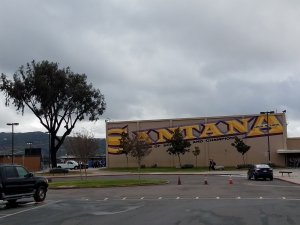
Printer-friendly version Story and photo by Karen Pearlman April 9, 2026 (Santee) — Twenty-five years after teenage student armed with a gun opened fire at Santana High School, survivors and prosecutors are closer to closing a legal loophole they say allows the state’s most violent juvenile offenders to exploit the justice system for early release. On Tuesday in Sacramento, the Assembly Public Safety Committee voted 8-0 to advance Assembly Bill 1959, a bipartisan measure authored by Assemblymember Dr. Darshana Patel (D-San Diego). The bill aims to restore judicial discretion in cases involving mass casualties and “heinous” crimes committed by minors. The legislation addresses a specific intersection of California’s recall and resentencing laws. Under current law (Penal Code section 1170(d)), individuals sentenced to life without parole as minors can have their sentences reconsidered after serving at least 15 years. However, a legal “loophole” exists for those who were under 16 at the time of their offense. If a court finds these individuals eligible for resentencing, they are automatically transferred to juvenile court. Because the juvenile system cannot maintain custody of an offender once they reach adulthood, the court is often forced to release the defendant immediately — regardless of whether they remain a threat to public safety. AB 1959 would update Welfare and Institutions Code section 707, allowing a judge to hold a transfer hearing to decide if a now-adult offender should be sentenced in juvenile or adult court, regardless of whether they were under 16 at the time of the crime. The 2001 Santana shooting The bill’s primary catalyst is the case of Charles Andrew “Andy” Williams, who at age 15 killed classmates Randy Gordon and Bryan Zuckor, and injured 13 others at Santana High in 2001. He was sentenced to 50 years in prison. Williams, now nearly 40, was recently denied parole in 2024 due to ongoing public safety concerns. However, in 2025, he filed a petition for recall and resentencing under the current statutes. Because of the existing loophole, his case could be transferred to juvenile court — potentially resulting in his release despite having served less than half of his 50-years-to-life sentence. When asked about the practical risk of a judge being forced to release Williams directly from a courtroom today if AB 1959 does not pass, San Diego County District Attorney Summer Stephan declined to comment specifically, noting it remains an open case. However, in a statement released by her office, Stephan warned that these laws “were never meant to result in the immediate release of individuals who commit murder, school shootings or serial rapes in our communities.” She described the current situation as a “dangerous loophole… that results in immediate release without any meaningful demonstration of rehabilitation, remorse, or assurance of public safety.” While prosecutors describe him as a calculated killer, Williams’ defense attorney, Laura Sheppard, said her client has been transformed by two decades in prison. During a 2024 parole hearing, Williams reportedly wept while listening to victim testimony, and his legal team at the time maintained he showed “nothing but remorse.” The Parole Board was not convinced, stating in their denial of his 2024 parole bid that Williams still lacked a clear understanding of “why he committed this horrendous act of violence.” Williams himself has said that on the day of the shooting, he felt suicidal and wanted to be killed by police, but ultimately changed his mind and surrendered. In prison, he wrote letters to families of his victims expressing remorse and apologizing for his actions. He earned his high school diploma and associate degrees, was working on a bachelor’s degree as of last year, and has become a certified substance abuse counselor and offender-mentor counselor helping inmates overcome addiction and other issues. In January of this year, Williams was seen in tears as a judge ruled he was eligible for the juvenile court transfer that AB 1959 now seeks to block. Constitutional and reform concerns The bill’s path to a unanimous committee vote was paved by strategic amendments. Stephan acknowledged that the original version of the bill generated significant opposition from juvenile reform groups. “As we approached the hearing date, we seriously considered the concerns of the opposition,” Stephan said. Her office worked with Assemblymember Patel to narrowly tailor the bill to focus specifically on mass-casualty events or multiple first-degree murders with special circumstances. This targeted approach led the California Public Defenders Association to withdraw its initial opposition. Furthermore, Stephan expressed confidence that the bill would survive future constitutional challenges regarding retroactive sentencing changes. “AB 1959 does not change the rules,” Stephan said. “It provides the opportunity to have their resentencing in the same court where they were originally sentenced — adult court. There were no constitutional concerns raised by the legislative analysts, legislators nor by any groups that traditionally oppose new public safety legislation.” Phil Ortiz speaks out Stephan was joined in Sacramento by El Cajon City Councilman Phil Ortiz, who was a student at Santana High during the 2001 tragedy. During his testimony, Ortiz urged the committee to consider the permanent nature of the damage caused by mass shooters. “I’m here to say, this pain doesn’t go away,” he said. “More than 20 years later the effects are still causing casualties. One of my classmates who died, Randy Gordon, his mom was found a couple years ago in a homeless encampment… her life destroyed by the death of her son.” Ortiz noted that while he supports rehabilitation, the law must balance justice for victims. “The damage to the victims is permanent and the consequences to the perpetrators should be permanent as well.” While the vote was 8-0, Assemblymember LaShae Sharp-Collins (D-San Diego) part of the Assembly Public Safety Committee, was not present for the hearing and did not record a vote, a move often made by legislators seeking further clarification. The other Assembly Public Safety Committee Members are Chair Nick Schultz (D-Burbank); Vice Chair Juan Alanis (R-Modesto); Mark Gonzalez (D-Los Angeles); Matt Haney (D-San Francisco); John Harabedian (D-Pasadena); Tom Lackey (R-Palmdale); Stephanie Nguyen (D-Elk Grove); and James C. Ramos (D-San