
Artist Profile – The Unconventional Phebe Burnham
Printer-friendly versionBy Jackie Hanson “There’s a colorful character,” you might say to yourself upon seeing Phebe Burnham laughing and chatting at a local art event. If you guessed that she was one of the artists (or the artist, as is often the case) you’d be correct. Phebe Burnham is not only a source of local color, she is an acclaimed artist, widely exhibited and collected, both locally and nationally. Printer-friendly version
“Delana’s Dirty Pizza” Wins Charity Cook-Off at New Sammy’s in La Mesa
Printer-friendly versionIf you’re a fan of Sammy’s Wood-fired Pizza, check out "Delana’s Dirty Pizza" featured on the menu through mid-September. The creation concocted by Delana Bennett of Star 94.1 radio’s “Jeff and Jer Showgram” was judged the winner during a charity cook-off held August 13th to kick off the grand opening of Sammy’s newest location in the La Mesa Trolley Center on Fletcher Parkway. Proceeds from Bennett’s pizza will benefit the three branches of the East County YMCA. Delana competed with other radio and T. V. personalities but by far, her Cajun-style pie was the judge’s favorite. “I’m from the South originally, and it’s all the ingredients I use in my famous Jambalaya – I just put them on a pizza. Delicious! There was a round of Tums for everyone,” Delana quipped. East County Magazine’s editor checked out the festivities, savoring not only a variety of tasty pizzas, but also ahi burgers, wine, and a variety of creative samplings. A large patio in back plus open-air seating in front provide ample seating in addition to the core restaurant and bar areas, making this an ideal gathering spot. Established first in La Jolla, Sammy’s now has 17 locations in Southern California and Las Vegas. Printer-friendly version
The Will Power Report – Solar Roofs
Printer-friendly version Nothing but the Truth! By Will Power The real unemployment rate in the U.S. is over 7%. Many people have stopped looking for jobs. Particularly hard hit is the construction business, due to the mortgage meltdown. The thin-film solar panel business needs a government subsidy and tax breaks for homeowners who install prefab solar panels. The new laser-deposited thin-film technology promises to drive down costs by a factor of two or three. A little investment here will go a long way. Snap-together solar shingles, solar wall panels, and even solar fabric have already been demonstrated. The army is testing tents made of fabric which can produce electricity. Big plus- termites don’t eat silicon. Re-roof with solar and your roof will last 100 years. Once the industry gets a leg up, millions of unemployed US construction workers will have work. If every roof in the US was a solar roof, think of the savings in imported oil. Of course, Big Oil and Big Energy are opposed to this technology because they now have a financial stranglehold on home energy production. Whole areas of the California and Arizona deserts are prime real estate for industrial scale solar panel “factories”. All that is needed is investment and the political will. It’s time for the Big Oil Dinosaurs to get the hell out of the way! China is poised to pass the United States in this emerging technology. The nation that can produce an efficient and affordable solar panel industry will rule the world. Let’s hope it is the United States and not the Chinese or Indians that manage to Organize the solar power industry. Will Power is a retired teacher who holds a masters degree in creative writing. Printer-friendly version
Still No County Fire Department Five Years After Cedar Blaze
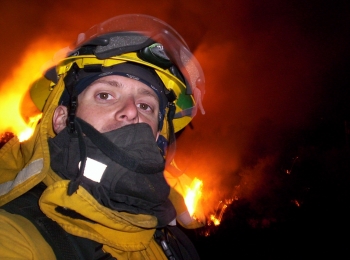
Printer-friendly version Still No County Fire Department Five Years After Cedar Blaze By E.A. Barrera “Given the existing high-risk conditions that are projected to continue into the future, destructive firestorms will certainly occur again. Yet, even armed with this knowledge and after the Cedar Fire wake-up call, the San Diego region is woefully unprepared.” — San Diego County Grand Jury, May 29, 2008 October will mark the first anniversary of the Witch Creek Fires and fifth anniversary of the deadlier Cedar Fire. Four years have passed since voters overwhelmingly approved Proposition “C” which called for a Countywide Fire Department. Yet the County of San Diego is still at the nascent stage of organizing collective fire departments of the region into one unified command structure.In the past two months, local politicians voted to ask voters to approve a $52 increase in their annual property taxes in order to fund such a unified fire command. On June 25, the Board of Supervisors voted unanimously to approve a consolidation of some of the counties twenty-three separate fire departments, while boasting that they had spent $3 million from the County’s General Fund and Community Development Block Grant funds to purchase eight four-wheel drive fire engines. County Supervisors will spend $15.5 million dollars annually to bring additional resources and firefighters to more than 50 existing fire stations throughout the region, unifying twelve agencies to merge through a three-phased process. “Over half the County will be unified into a single, less-fractured, more efficient agency. This means stronger and better coordinated services in our rural areas. And, it brings us significantly closer to our eventual goal of creating a Countywide fire entity to serve the region,” said Jacob, who also stated in a previous announcement that purchase of the new fire trucks represented “proof positive of the County’s aggressive efforts to make our region the best prepared it can be for fire and other disasters.” Yet county fire officials and residents have been hearing promises from politicians for the last five years about unifying the departments, only to see little or no action. In August 2005, a plan was put forward by the San Diego Local Agency Formation Commission (LAFCO) to begin the process of reorganizing the region’s fire protection. LAFCO issued a scathing report in February 2005 which labeled the county’s emergency preparedness organization “bewildering” and “short-sighted.” “In the absence of compelling cooperative agreements or inclusive organizational structure, the region’s 28 autonomous agencies exist in an environment that results in isolated policy decisions impacting the effectiveness of region-wide service,” stated the 2005 LAFCO report. In their report, LAFCO said the region’s agencies had not developed a universal response criterion, had not provided a unified command or employed unified standards for training safety personnel, and were not able to “engage in strategic regional planning that could eliminate redundancies” and engender more effective use of resources. “Because emergency services are divided among so many agencies—no single authority is accountable for creating and implementing a comprehensive vision for the region,” stated the LAFCO report. “The determinations in this report underscore the fact that the region’s bewildering organization of un-served areas and redundant, under-funded public agencies did not evolve spontaneously; it was encouraged and given shape by short-sighted public policy choices that were adopted without a vision of how such decisions would impact public safety.” Fast forward three years later; the County Grand Jury report blasted the County’s continued lack of progress in creating what they term an “historically and currently failing” system to “provide the resources necessary to protect residents and visitors during significant firestorms.” “San Diego County … spends only $8.5 million annually on fire protection as opposed to Orange County which spends $260 million and Los Angeles County that spends $860 million. According to 2007 State of California estimates, San Diego County has over 3 million people and covers 4,200 square miles. For comparison purposes, Orange County has an estimated 3 million people and covers 790 square miles, while Los Angeles County has approximately 10 million people and covers 4,060 square miles,” stated the Grand Jury Report on May 29, 2008. According to County records, the 2003 Cedar Fire burned 376,237 acres, destroyed 3,241 structures and killed 15 San Diego County residents, including one firefighter. Four years later, the 2007 Witch Creek/Guejito fire burned 368,340 acres, destroyed 2,653 structures, caused 23 citizen injuries and 89 firefighter injuries, and ultimately killed 10 San Diego residents. “According to researchers, fire season has grown two months longer and destroys 6.5 times more land than in the 1970s,” stated the Grand Jury. “In spite of Santa Ana conditions, insufficient rainfall, longer fire seasons and urban sprawl, the County remains without a unified fire protection agency and no central command. Assessments following the Cedar Fire and the Witch Creek/Guejito fire have consistently called for a better-organized and more responsive system in the unincorporated area where wildfire tends to originate.” During Lace’s 2005 study of the county’s fire preparedness, local fire department personnel severely criticized the Supervisors’ for their lack of commitment to fire protection. San Marcos Fire Department Chief Larry Kinnard said the problem for county fire fighters was one of funding. He was joined by Lakeside Fire Chief Mark Baker, who also called for an increase in property tax revenues to pay for local fire services. Both men echoed blistering statements made by then-president of the San Diego Fire Chiefs Association Kevin Crawford, who in October 2004 said a chief culprit leading up to the lack of preparation for the Cedar Fire was “an atmosphere of inattention” on the part of the county towards the volunteer and smaller fire departments in San Diego’s backcountry. “Fire protection in San Diego County is like a large jigsaw puzzle. One of the missing pieces in this fire protection jigsaw puzzle has been the county’s lack of participation in the business of fire protection in the unincorporated areas,” said Crawford. “It has been the opinion of the fire chiefs that this county believes
Faith, Science and Anti-Catholicism: “THE X-FILES: I WANT TO BELIEVE”
Printer-friendly versionBy E.A. Barrera Courtesy of 20th Century Fox. “It is the glory of God to conceal a thing: but the honor of kings is to search out a matter.” Proverbs 25:2 King James Bible “THE X-FILES: I WANT TO BELIEVE” is a solid, if not often campy thriller involving the nightmares and paranoia many science-fiction fans crave. The intellectual romance between former FBI agents Fox Mulder and Dana Scully is once more on display in the understated way the 1990’s television show teased fans for nine seasons. And beyond that is the continued theme of the program – the religious mantra of “I want to believe” applying to everything from the existence of God, to extra-terrestrials, to the concept that science can both be our saving grace and our harbinger of doom. Running rampant through the film’s story of mad Russian scientists scheming to build a new human being through the stolen parts of kidnapped women, is a constant attack on the Catholic Church and the debate over which “religion” – science or Catholicism – best represents the power and will of God. It is a massive broadside against the strongest Christian sect in the world, with the message loud and clear that Catholic clergy represent either hypocrisy and danger, or at the very least, an indifference to human suffering. The film’s structure is the classic story of a hero returned. Mulder (David Duchovny), the brilliant FBI profiler who spent his life in search of the missing sister he believed was abducted by aliens, is needed once again to help search for a female FBI agent who has disappeared. Though long retired from the FBI and considered a crank, Mulder is asked to return due to the use of a psychic former Catholic priest (Billy Connelly) as the only lead the FBI has to locate the missing agent. The FBI approaches Scully (Gillian Anderson), a medical doctor and scientist who has also abandoned her FBI career. Scully is asked to locate Mulder for the case, and reluctantly agrees. Courtesy of 20th Century Fox. The heart of the series “X-Files” was always the understated and building romance between the scientist and Catholic Scully who does not believe in aliens, versus the eccentric agnostic genius Mulder. One has faith in the simultaneous existence of science and God. The other has faith in the existence of everything but God. The television show never saw them kiss or go to bed during all but the final episode of the series, and at key, random moments, the simple gesture of them quietly holding hands, fueled the intensity fans had for that romance. Near the last episodes of the television show it was revealed that the two had in fact become romantic and even produced a child (who was given up for adoption). But series’ creator and producer Chris Carter never chose to make their romance the focal point of any episode. It was always treated as backdrop to the main events and thus when it was finally fully exposed in the last episode of the film, it was treated matter-of-factly. In this film (the second feature film of the series, ten years after the first feature’s release and six years after the series concluded its television run), their relationship is still treated as an understood, minimal backdrop to the larger action. The two are living together and have all the casual intimacy of a couple who have been together for years. This relationship outside of any formal marriage is one small thematic rejection of Catholic thought. A large one is the Catholic hospital where Scully now works – attempting to save the life of a boy with Sandhoff Disease even as the hospital’s catholic management decides to send the boy to a hospice, refusing to treat him due to excessive costs and the futility they see in treating him for an incurable disease. However the largest rejection is realized in the role of Connelly’s character of Father Joseph Crissman. That character is a convicted child-molester whose eyes bleed during particularly horrific moments of psychic insight. He is seeking some form of redemption from God for his crimes and sins. But the interaction of Scully with Crissman – the animosity and fear she displays towards him from the outset – is coupled with another running story line, which is Scully’s own crises of faith. Courtesy of 20th Century Fox. For if the heart of the X-Files has been the sexual chemistry between Mulder and Scully, the soul of the X-Files has been the entire subject of faith and the search for a mystical truth. “This movie is all about faith,” said “X-Files“ co-creator Frank Spotnitz in an interview with Collider.com magazine. “I’m very interested in faith, and the question of faith. The ending that we came up with – which I think is really the only ending, even if you are a believer, is that you must find god through faith. It’s not going to be proven to you. That’s what I believe as a non-believing spiritual person. If there is a god, it is going to require your faith to find him. That’s what was so beautiful about the movie to me, and beautiful about the character Father Joe, this kind of monstrous person, who it is up to your own thoughts to decide if he found redemption, and about Scully’s journey.” Scully’s fear of the fallen priest and her battles with the Catholic administrators of the hospital create a touching emotional base for her relationship with Mulder. He is a man of passionate faith for his mission. As with her doubts about the Catholic Church, so linger Scully’s doubts about Mulder’s crusades. But in the end, she always returns to the Church, her belief in science, and her love for Mulder. “THE X-FILES: I WANT TO BELIEVE” is not the best episode of the series. It sometimes drags and there is a silliness about the story’s conclusion that may have
Senior Citizens’ Resources
Printer-friendly version In loving memory of Philip Genser Printer-friendly version
COMING SOON!
Printer-friendly versionNews, views and resources to improve communities in San Diego’s eastern region* Local and regional news Award-winning team of journalists Wildfire/emergency alerts National news links Best of East County (highlights attractions and activities) Calendar of events (concerts, shows, festivals and more) East County Eater restaurant reviews Lively and informative features Columns and editorials representing diverse voices Voter information People power (individuals helping our community) Photo contests Weather Arts and music Community resources (city/county services, senior and youth programs, community groups and more) Back Fence blog–tell us your views! Online free starting Sept. 1st Sponsors and news tips are welcome. Contact 619-698-7617 or editor@eastcountymagazine.org. * Covering all San Diego County communities east of I-15 to the Imperial County line, south to the Mexican border and north to the Riverside County line. Circulation includes San Diego County mountain and desert towns plus all cities, unincorporated County areas and San Diego neighborhoods east of I-15. Communities covered include Blossom Valley, Bonita, Borrego Springs, Boulevard, College area (SDSU), College Grove, Del Cerro, Dehesa, Dulzura, El Cajon, Escondido, Guatay, Jacumba, Jamul, La Mesa, Lakeside, Lemon Grove, Mount Laguna, Ocatillo, Otay Mesa, Peñasquitos, Pine Valley, Potrero, Poway, Ramona, Rancho Bernardo, Rancho San Diego, San Carlos, Santa Ysabel, Santee, Scripps Ranch, Spring Valley, Tierra Santa, Valley Center, Warner Springs and Indian tribal lands. A nonprofit publication sponsored by Heartland Coalition & Foundation for Change. Heartland Foundation is a DBA of Heartland Coalition, a nonprofit organization. Printer-friendly version