
U.S. SENATE PANEL DIVIDED OVER CLIMATE AS CAUSE OF RISING INSURANCE PREMIUMS
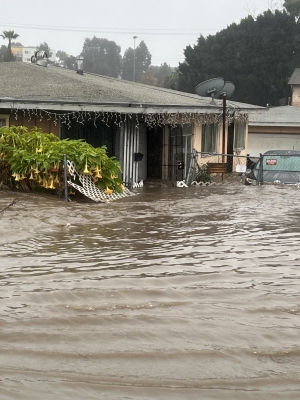
By Lia Chien, Kansas Reflector Photo: Ford’s Flooded Home during January 22, 2024 flooding in San Diego, East County Magazine file photo June 10, 2024 (Washington, D.C.) — The U.S. Senate Budget Committee debated the cause of the insurance crisis plaguing homeowners around the country at a Wednesday hearing, with Democrats identifying climate change as the ultimate driving force of rising premiums and Republicans pointing to high government spending and inflation. Homeowners insurance premiums have skyrocketed in recent years, following billions in damages, which has led many insurance companies to drop coverage. An uptick in extreme weather events has been a factor in rising costs. Budget Committee Chair Sheldon Whitehouse noted the example of Florida’s state-backed insurer Citizens in his opening statement. As Florida faces an increased threat of hurricanes, heat waves and flooding, national insurers have dropped plans or raised prices in disaster-prone areas. Residents are left uninsured or priced out and instead turn to Citizens, an insurer of last resort backed by the state. Louisiana and California are facing similar problems. Average homeowners insurance premiums in the Sunshine State total just over $4,000 a year, according to a March report from Florida Today. That’s well above the national average premium of about $2,700. With so many residents using Citizens, the insurer’s payouts for damages could exceed its reserves, leading to even higher premiums for policyholders, Whitehouse said. “Good luck with that,” Whitehouse, a Rhode Island Democrat, said. “Particularly if the surcharge goes to hundreds or even thousands of dollars.” Not just Florida Whitehouse also highlighted the crisis isn’t contained to Florida. He cited a New York Times investigation that found in 2023, insurance companies lost money on homeowners policy coverage in 18 states. “The states may surprise you,” said Whitehouse, noting how widespread the issue is. “The list includes Illinois, Michigan, Utah, Washington and Iowa.” The Democratic senators present at Wednesday’s hearing and their witnesses all pointed to climate change as a major driver of high-damage claims and rising premium costs. They added the insurance crisis will only get worse with more extreme weather. Rade Musulin, an actuary for Finity Consulting who testified on behalf of the Democrats, said Florida is an example of how dire the insurance crisis could become around the country. “In the coming decades, we must prepare for the possibility of more extensive or more extreme hurricanes, and coastal flooding from Texas to New England,” he said. “Florida’s experience is a warning on what we may see in the future in other states.” Extreme weather events will increase as the earth’s temperature rises, according to numerous government and nonprofit sources, including the Intergovernmental Panel on Climate Change’s 2021 report. Major hurricanes will be more common, floods will swell, and wildfires will ignite easier due to surging heatwaves. Sen. Jeff Merkley, a Democrat from Oregan, pressed the importance of climate resilience in order to solve this insurance crisis. “It’s hugely irresponsible for us to just say we can fix the insurance market and fail to address the underlying causes that will get worse with every succeeding decade far into the future,” Merkley said. GOP blames spending, inflation Most committee Republicans, on the other hand, identified rising government spending and inflation as the main drivers of increased insurance prices. “The majority hopes that we stop discussing our unchecked deficit spending that has fueled inflation, hammering hard working Americans and as I will say shortly, has something to do with driving up the cost of insurance,” Chuck Grassley, an Iowa Republican who is the ranking GOP member on the panel, said. Grassley pointed to the increased costs of labor and materials to rebuild or repair homes, as well as more people moving to disaster-prone areas, as other factors contributing to high insurance premiums. Sen. Ron Johnson, a Republican from Wisconsin, stated that “the premise of this hearing is just completely off,” before asking Republican witness EJ Antoni, a research fellow at the Heritage Foundation, how much inflation and lawlessness was responsible for insurance hikes. “If you just talk about government action, and include both a failure to respond to criminal activity, and inflation and regulatory costs, that explains 90%, approximately, of the increase that we’ve seen in insurance premiums over the last several years,” said Antoni. Antoni did not expand on how he calculated that figure. Sen. Mitt Romney of Utah stood apart from his Republican colleagues and acknowledged climate change as a driver of insurance price increases. But he said it would take a lot more than just American action to solve both crises. “The idea that somehow we’re going to fix the climate and solve the insurance problem is pie in the sky,” Romney said. “It’s avoiding the reality that we can’t fix the climate because it’s a global issue, not an American issue.” Extreme weather upcoming As the summer approaches, homeowners across the country brace for a season of extreme weather. The National Oceanic and Atmospheric Administration predicts an 85% chance of an above-normal hurricane season and heat waves are already surging in the West. Whitehouse said it’s more important than ever for Congress to unite in a solution and called on Republicans to address the issue. “It all begins with climate risk,” he said. “And a major party pretending that climate risk isn’t real imperils our federal budget and millions of Americans all across our country.” This story first appeared in the Kansas Reflector and is published with an in-house file photo in East County Magazine under a creative commons license.
U.S. SENATE PANEL DIVIDED OVER CLIMATE AS CAUSE OF RISING INSURANCE PREMIUMS
By Lia Chien, Kansas Reflector Photo: Ford’s Flooded Home during January 22, 2024 flooding in San Diego, East County Magazine file photo June 10, 2024 (Washington, D.C.) — The U.S. Senate Budget Committee debated the cause of the insurance crisis plaguing homeowners around the country at a Wednesday hearing, with Democrats identifying climate change as the ultimate driving force of rising premiums and Republicans pointing to high government spending and inflation. Homeowners insurance premiums have skyrocketed in recent years, following billions in damages, which has led many insurance companies to drop coverage. An uptick in extreme weather events has been a factor in rising costs. Budget Committee Chair Sheldon Whitehouse noted the example of Florida’s state-backed insurer Citizens in his opening statement. As Florida faces an increased threat of hurricanes, heat waves and flooding, national insurers have dropped plans or raised prices in disaster-prone areas. Residents are left uninsured or priced out and instead turn to Citizens, an insurer of last resort backed by the state. Louisiana and California are facing similar problems. Average homeowners insurance premiums in the Sunshine State total just over $4,000 a year, according to a March report from Florida Today. That’s well above the national average premium of about $2,700. With so many residents using Citizens, the insurer’s payouts for damages could exceed its reserves, leading to even higher premiums for policyholders, Whitehouse said. “Good luck with that,” Whitehouse, a Rhode Island Democrat, said. “Particularly if the surcharge goes to hundreds or even thousands of dollars.” Not just Florida Whitehouse also highlighted the crisis isn’t contained to Florida. He cited a New York Times investigation that found in 2023, insurance companies lost money on homeowners policy coverage in 18 states. “The states may surprise you,” said Whitehouse, noting how widespread the issue is. “The list includes Illinois, Michigan, Utah, Washington and Iowa.” The Democratic senators present at Wednesday’s hearing and their witnesses all pointed to climate change as a major driver of high-damage claims and rising premium costs. They added the insurance crisis will only get worse with more extreme weather. Rade Musulin, an actuary for Finity Consulting who testified on behalf of the Democrats, said Florida is an example of how dire the insurance crisis could become around the country. “In the coming decades, we must prepare for the possibility of more extensive or more extreme hurricanes, and coastal flooding from Texas to New England,” he said. “Florida’s experience is a warning on what we may see in the future in other states.” Extreme weather events will increase as the earth’s temperature rises, according to numerous government and nonprofit sources, including the Intergovernmental Panel on Climate Change’s 2021 report. Major hurricanes will be more common, floods will swell, and wildfires will ignite easier due to surging heatwaves. Sen. Jeff Merkley, a Democrat from Oregan, pressed the importance of climate resilience in order to solve this insurance crisis. “It’s hugely irresponsible for us to just say we can fix the insurance market and fail to address the underlying causes that will get worse with every succeeding decade far into the future,” Merkley said. GOP blames spending, inflation Most committee Republicans, on the other hand, identified rising government spending and inflation as the main drivers of increased insurance prices. “The majority hopes that we stop discussing our unchecked deficit spending that has fueled inflation, hammering hard working Americans and as I will say shortly, has something to do with driving up the cost of insurance,” Chuck Grassley, an Iowa Republican who is the ranking GOP member on the panel, said. Grassley pointed to the increased costs of labor and materials to rebuild or repair homes, as well as more people moving to disaster-prone areas, as other factors contributing to high insurance premiums. Sen. Ron Johnson, a Republican from Wisconsin, stated that “the premise of this hearing is just completely off,” before asking Republican witness EJ Antoni, a research fellow at the Heritage Foundation, how much inflation and lawlessness was responsible for insurance hikes. “If you just talk about government action, and include both a failure to respond to criminal activity, and inflation and regulatory costs, that explains 90%, approximately, of the increase that we’ve seen in insurance premiums over the last several years,” said Antoni. Antoni did not expand on how he calculated that figure. Sen. Mitt Romney of Utah stood apart from his Republican colleagues and acknowledged climate change as a driver of insurance price increases. But he said it would take a lot more than just American action to solve both crises. “The idea that somehow we’re going to fix the climate and solve the insurance problem is pie in the sky,” Romney said. “It’s avoiding the reality that we can’t fix the climate because it’s a global issue, not an American issue.” Extreme weather upcoming As the summer approaches, homeowners across the country brace for a season of extreme weather. The National Oceanic and Atmospheric Administration predicts an 85% chance of an above-normal hurricane season and heat waves are already surging in the West. Whitehouse said it’s more important than ever for Congress to unite in a solution and called on Republicans to address the issue. “It all begins with climate risk,” he said. “And a major party pretending that climate risk isn’t real imperils our federal budget and millions of Americans all across our country.” This story first appeared in the Kansas Reflector and is published with an in-house file photo in East County Magazine under a creative commons license.
READER’S EDITORIAL: ALZHEIMER’S AWARENESS MONTH

By Assemblymember Marie Waldron June 9, 2024 (Valley Center) — As with so many issues involving medical research and healthcare, San Diego County is ground zero in the battle against Alzheimer’s disease. Currently, it is estimated that 84,000 persons are living with Alzheimer’s disease in San Diego County, a number that is expected to increase to 117,000 by 2030. Another 250,000 San Diegans are caring for loved ones suffering from Alzheimer’s, which is the county’s third leading cause of death. California now has over 720,000 residents living with the disease, more than any other state. That number is expected to grow by 127 percent over the next 20 years, though the state’s population is only projected to grow by 16 percent. Unfortunately, finding a cure has been elusive. Despite billions spent on research and ongoing clinical trials, many of which are now underway here in San Diego, finding a cure has been elusive, so far. Age is the greatest risk factor and there is no known cause, cure or prevention. Voluntary contributions to Alzheimer’s research have raised more than $25 million over the years; research that must continue and accelerate. Alzheimer’s patients and their caregivers need acknowledgement and support. That’s why I’m so happy to join my Assembly colleagues as a co-author of Assembly Concurrent Resolution 204 (ACR 204) which declares June 2024 Alzheimer’s disease and Brain Awareness Month. ACR 204 raises awareness about the disease, the need to support patients and their families, along with support for ongoing research that eventually will lead to a cure. As a long-time member of the Assembly Health Committee and its current Vice Chair, I will continue to do my small part to improve overall healthcare in California, and to support efforts that eventually will win the fight against Alzheimer’s disease. To view a copy of ACR 204 please click here. ———————— Assemblymember Marie Waldron, R- Valley Center, represents the 75th Assembly District in the California Legislature, which includes the cities of Poway, Santee, portions of the City of San Diego, and most of rural eastern and northern San Diego County. ———————— The opinions in this editorial reflect the views of the reader and do not necessarily reflect the views of East County Magazine. To submit an editorial for consideration, contact editor@eastcountymagazine.org
READER’S EDITORIAL: ALZHEIMER’S AWARENESS MONTH
By Assemblymember Marie Waldron June 9, 2024 (Valley Center) — As with so many issues involving medical research and healthcare, San Diego County is ground zero in the battle against Alzheimer’s disease. Currently, it is estimated that 84,000 persons are living with Alzheimer’s disease in San Diego County, a number that is expected to increase to 117,000 by 2030. Another 250,000 San Diegans are caring for loved ones suffering from Alzheimer’s, which is the county’s third leading cause of death. California now has over 720,000 residents living with the disease, more than any other state. That number is expected to grow by 127 percent over the next 20 years, though the state’s population is only projected to grow by 16 percent. Unfortunately, finding a cure has been elusive. Despite billions spent on research and ongoing clinical trials, many of which are now underway here in San Diego, finding a cure has been elusive, so far. Age is the greatest risk factor and there is no known cause, cure or prevention. Voluntary contributions to Alzheimer’s research have raised more than $25 million over the years; research that must continue and accelerate. Alzheimer’s patients and their caregivers need acknowledgement and support. That’s why I’m so happy to join my Assembly colleagues as a co-author of Assembly Concurrent Resolution 204 (ACR 204) which declares June 2024 Alzheimer’s disease and Brain Awareness Month. ACR 204 raises awareness about the disease, the need to support patients and their families, along with support for ongoing research that eventually will lead to a cure. As a long-time member of the Assembly Health Committee and its current Vice Chair, I will continue to do my small part to improve overall healthcare in California, and to support efforts that eventually will win the fight against Alzheimer’s disease. To view a copy of ACR 204 please click here. ———————— Assemblymember Marie Waldron, R- Valley Center, represents the 75th Assembly District in the California Legislature, which includes the cities of Poway, Santee, portions of the City of San Diego, and most of rural eastern and northern San Diego County. ———————— The opinions in this editorial reflect the views of the reader and do not necessarily reflect the views of East County Magazine. To submit an editorial for consideration, contact editor@eastcountymagazine.org