
QUAKES RATTLE NERVES IN JULIAN AREA
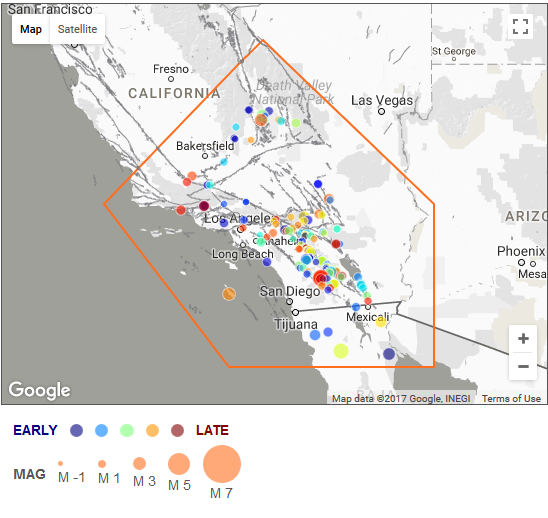
Printer-friendly version By Miriam Raftery December 9, 2017 (Julian) — Residents in the mountain town of Julian have had more than a power outage to cause frayed nerves. Numerous small earthquakes have occurred, including a magnitude 4.0 quake Wednesday that has triggered 76 aftershocks. Jennifer Andrews at the Southern California Seismic Network posted on the SCSN network yesterday that more aftershocks can be expected, adding, “There is a small chance (about 5%) that a larger quake could occur, with the likelihood decreasing over time.” The quakes are occurring along the Elsinore fault line, about 14 kilometers northeast of Julian at a depth of around 11 kilometers. ECM readers from Borrego to La Mesa have reported feeling some of the tremors, but no where were the jolts more jarring than in Julian. “I’m really not like the quakes!” Mary Prentice posted on the Julian Network page on Facebook.” But some residents gathered together during the power outage, took the earth-shaking in stride. “I think a good part of the town is here tonight at Wynola Pizza Barn,” Chip Jarman posted. “The grids are slowly coming back on line as we had one more earthquake as a sendoff to the departing Santa Ana winds.” Another Julian resident, Rufus Smith, found the activity “concerning,” adding, “It can be one of two things, lots of little ones and it runs out of juice, or its marinating for a big one.” He advised neighbors, “Be safe and be ready.” Printer-friendly version
IF YOU HAD FOOD SPOIL, BUSINESS INTERRUPTED OR OTHER DAMAGE FROM POWER OUTAGE, YOU CAN SUBMIT A CLAIM

Printer-friendly version Save receipts, take photos, and document your losses East County News Service December 8, 2017 (San Diego) – If you suffered damages due to planned power outages, you can submit a claim to SDG&E asking for reimbursement, says Helen Gao. SDG&E has posted information on its website: https://www.sdge.com/business/services/making-claim or scroll down to view the information provided by the utility: If you have suffered a loss or damage due to service interruption and believe we may be responsible, you can submit a claim which will be investigated and evaluated on a case-by-case basis. Please note that we will not be liable for failure to deliver gas or electric service to our customers due to circumstances beyond our reasonable control, such as weather conditions, damage by third parties or other intervening damage to our facilities. Submitting a Claim You can make a claim by: Downloading a claims form and submitting it via mail or fax. Mail to: San Diego Gas & Electric Attention: Claims Department P.O. Box 129831 San Diego, CA 92112 Fax to: 1-858-541-5737 Attention: Claims Department Calling our Customer Service Center at 1-800-411-SDGE (7343) A representative will document your claim information over the phone and provide you with a claim number. After we receive your claim, a claims representative will contact you within two business days. If your claim was forwarded to our Claims Department by a company field employee, we will make every effort to contact you within three business days. Our goal is to reach a final decision on any claim within 30-45 days. However, if the incident is complex in nature, the investigation and evaluation period may take longer. At the conclusion of our investigation, you will receive either a call from us or a letter informing you of our decision. If your claim is denied, we will provide you the reason for the denial. If you are not satisfied with our decision you have the option and right at any time during the claims process to file a civil action or a small claims lawsuit. You can also refer your loss to your insurance carrier who may reimburse you subject to policy coverage and any applicable deductible. Providing Supporting Documentation To evaluate your claim, we will need the following types of information: Property Damage: Repair estimates, invoices and proof of purchase Bodily Injury: Medical records and receipts for services rendered If you are asking for lost wages due to an injury, we will also need: Number of days/weeks you were off work Verification of lost time from your employer Pay stubs verifying your rate of compensation Business Interruption: Name and type of business Taxpayer I.D. Revenue and expenses statements Sales receipts prior to and after the incident Payroll records Bank statements and/or tax records for the business Food Loss and Spoilage: Itemized list of the food lost or spoiled with its cost Receipts or other documentation verifying purchase We evaluate food loss claims based on the recommended guidelines from the U. S. Department of Agriculture: A fully stocked freezer will usually keep food frozen for two days after losing power. A half-full freezer will usually keep contents frozen for about one day. In the refrigerator, food will usually keep up to four hours, depending on the temperature of the room. By clicking the link, you will leave www.sdge.com and transfer directly to the website of a third party which is not part of SDG&E. The Terms and Conditions and Privacy Policy on that website will apply. Printer-friendly version
BOIL WATER ORDERS ISSUED IN BOULEVARD, JULIAN AND CAMPO DUE TO POWER OUTAGES

Printer-friendly version Update December 9, 2017: A boil water has been aded for Vallecito County Park, 37349 Great Southern Overland in Julian, as well as the sites below. December 8, 2017 (San Diego’s East County)–The County of San Diego, Department of Environmental Health (DEH) has issued a Boil Water Advisory and Public Notification effective immediately for the following: Boulevard Pines Mobile Home & RV Park at 39375 Old Highway 80, Boulevard, CA 91905 Butterfield Ranch at 14925 Great Southern Overland, Julian, CA, 92036 Cameron Corners at 31484 Hwy 94, Campo, CA 91906 Campo Group at 31471 Hwy 94, Campo, CA 91906 Due to the recent power outage, these public water systems have lost pressure in their water distribution systems. As a precaution, Boil Water Advisories are being issued until laboratory results demonstrate the water is free from bacterial contamination. Click here for instructions on boiling water and alternative methods of disinfection For the latest emergency updates in English and Spanish, visit www.sdcountyemergency.com, and download the SD Emergency app. If you are affected by the fire and need to talk to someone by phone about evacuations, shelters, road closures and other non-emergency disaster-related services, call 211. If you are hearing impaired, dial 711 and ask to be connected to (858) 300-1211. Printer-friendly version
ACLU TO MONITOR WILDFIRE VICTIMS’ RIGHTS
Printer-friendly version Social service agencies are required by law to provide disaster-related assistance without asking for information or documents East County News Service December 8, 2017 (San Diego) — As wildfires rage in Southern California this week, the American Civil Liberties Union (ACLU) of San Diego and Imperial Counties is on alert to protect the rights of fire victims in this region. The San Diego ACLU is working with community partners to disseminate information about individuals’ right to receive emergency services and safe access out of danger areas without regard to immigration status and without the requirement to present identification. The organization is also providing the means for people to report violations of state and local laws protecting their safety. For more information on the current emergency, visit http://www.sdcountyemergency.com/ or call 211. (En Español, visite http://www.sdcountyemergency.com/es-us/ o llame al 211) The October 2007 wildfires torched huge swaths of San Diego County. Many of the county’s most vulnerable residents affected by the devastating wildfires were denied emergency services in their time of greatest need. In some cases, aid workers asked evacuees for proof of identity to enter emergency shelters, access emergency food and water, and speak to relief workers. Together with Justice Overcoming Boundaries, and the San Diego Immigrant Rights Consortium, the ACLU released a report (aquí en español) detailing these problems. In 2008, the ACLU worked with the American Red Cross of San Diego & Imperial Counties and other allies to help pass a bill requiring public employees to provide evacuees with disaster-related assistance without asking for information or documents not strictly necessary to determine eligibility for services. In addition, ACLU and Red Cross created related materials to educate the public about their rights: Know Your Rights During a Disaster (English) Cuando Ocurre un Desastre: Conoce tus Derechos (Español) Know Your Rights During a Disaster (Arabic) Know Your Rights (comic strip – English; tira cómica; comic in Vietnamese) People who hear of or witness anyone being denied disaster-related assistance, or are themselves denied assistance during this fire emergency are asked to contact the San Diego ACLU at info@aclusandiego.org or call 619-232-2121. Printer-friendly version
LOW-INCOME FIRE SURVIVORS TO GET REBUILDING HELP FROM UNITED WAY

Printer-friendly version East County News Service December 8, 2017 (San Diego) – Wildfires are currently devastating regions of Southern California, with hundreds of thousands of acres destroyed and people displaced from Ventura to San Diego Counties, including the growing Lilac Fire. United Way of San Diego County is working with United Way of Greater Los Angeles, which has set up the Southern California Wildfire Fund to help victims of these fires rebuild their lives. For this fund, 100 percent of the donations collected through this designated fund will support long-term recovery and re-building efforts for low-income families affected by the fires. Donations supporting San Diego County can be made online at www.unitedwayla.org. Checks may be sent to the United Way office at 1150 S. Olive Street, Suite T500, Los Angeles, CA 90015. Please write “SoCal Wildfire Fund” in the memo line. Funds will be allocated based on need to vetted organizations throughout Southern California that will focus on rebuilding and recovery efforts for victims affected by the fires, including United Way of San Diego County, United Way of Greater Los Angeles and United Way of Ventura County. “We’re devastated for the communities who have lost their homes and possessions to these wildfires and want to ensure that they get the support needed to rebuild their lives in the aftermath,” said Elise Buik, president and CEO of United Way of Greater Los Angeles. “We’re proud to see so many business, community and civic leaders voice their support and so many individuals provide necessary items for those in need.” “We are working with our United Way Network and community partners to build long-term assistance for families,” said Laurie Coskey, Ed.D., president and CEO of United Way of San Diego County. “We stand united with our friends and neighbors throughout San Diego County.” If you or someone you know has been affected by the fires, individuals may connect with 2-1-1 San Diego, a free 24-hour emergency hotline that links you to thousands of local health and human services resources. 2-1-1 connects you with services including, but not limited to, emergency housing, food distribution, elder services, other youth and child care issues, and other physical and mental health services. Contact 2-1-1 San Diego by: Calling 2-1-1 on your phone View all 2-1-1 San Diego resources available to help you at:http://211sandiego.org/resources Visit 2-1-1 San Diego online at:http://211sandiego.org For current fire and emergency information in San Diego County, visit: www.sdcountyemergency.com About United Way of San Diego County For 97 years, United Way of San Diego Countyhas been disrupting cycles of poverty to change the odds for children and families. United Way plays a unique role in the community, bringing the people and resources together to spark breakthrough community action that elevates every child and family toward a brighter future. The organization focuses on educational milestones, such as kindergarten readiness, third grade literacy, and college and career pathways, providing support outside of school so children can be successful inside the classroom. LIVE UNITED is a call to action for everyone to get involved by donating and volunteering. Learn more at www.uwsd.org, the blog, Facebook and Twitter. About United Way Greater Los Angeles United Way of Greater Los Angeles is a nonprofit organization fighting to end homelessness and poverty by providing students with support needed to graduate high school prepared for college and the workforce, providing housing for our homeless neighbors, and helping hard-working families become financially stable. United Way identifies the root causes of poverty and works strategically to solve them by building alliances across all sectors, funding targeted programs and advocating for change. For more information, visit www.unitedwayla.org. Printer-friendly version
DONATE TO HELP LOCAL FIRE SURVIVORS
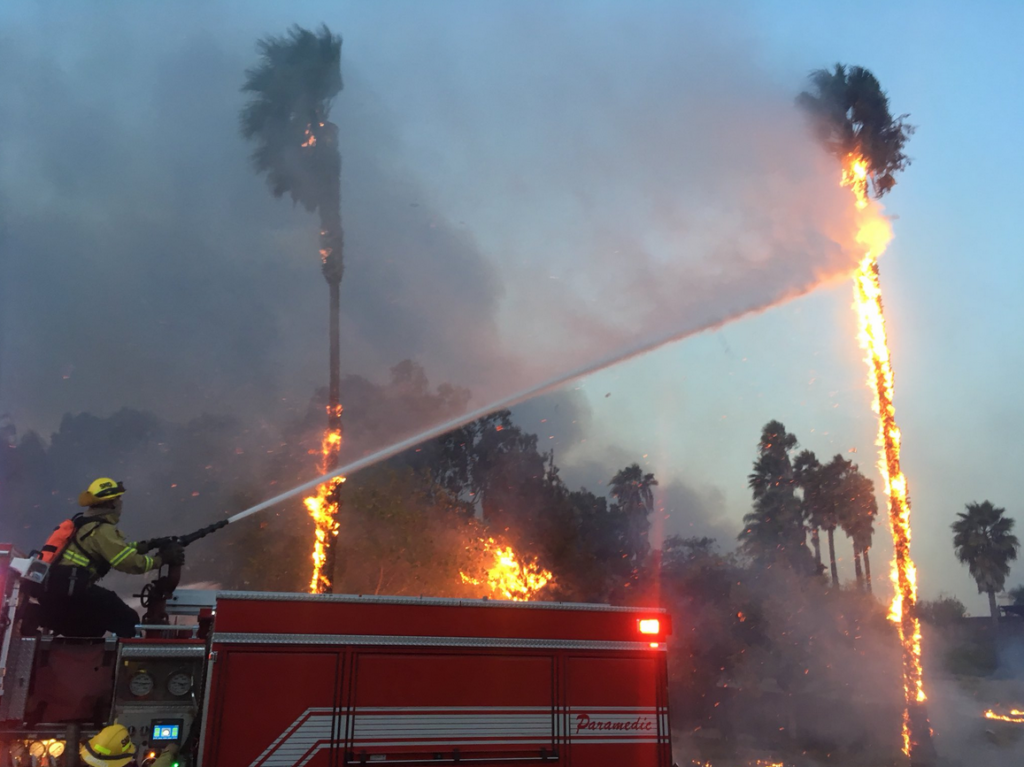
Printer-friendly version Source: County of San Diego Photo: San Diego Fire Department December 8, 2017 (San Diego) — If you are looking to help those affected by the Lilac Fire, a great way to do so is to send a monetary donation to a nonprofit organization. No donation is too small. The San Diego Foundation is accepting donations to assist in the recovery of wildfires. Donors can text “SDRECOVER” to 50155 or make a donation online at sdfoundation.org/disasterfund. A list of additional organizations is available through San Diego Voluntary Organizations Active in Disaster (SDVOAD) at sdvoad.org. The need for material items including clothes, blankets, and household goods has been met. Printer-friendly version
WESTINGHOUSE GENERATORS RECALLED
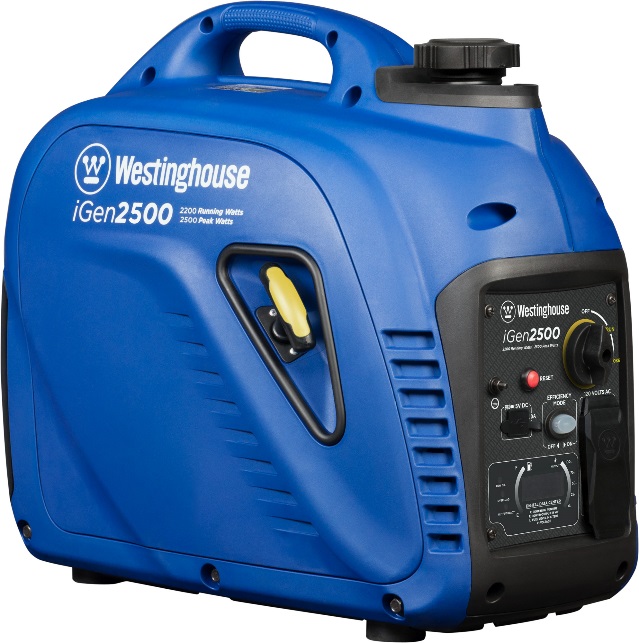
Printer-friendly version By Miriam Raftery December 8, 2017 (Washington D.C.) – The Consumer Product Safety Commission today announced that Westinghouse Portable Generators have been recalled by MWE Investments because they can overheat, posing a fire hazard: https://www.cpsc.gov/Recalls/2018/Westinghouse-Portable-Generators-Recalled-by-MWE-Investments-Due-to-Fire-Hazard. Consumers should immediately stop using the recalled generators and contact MWE Investments to arrange for free repair. The products, made in China and distributed by MWE Invetments of Ohio, were sold online through Amazon.com, Walmart.com, HomeDepot.com, Houzz.com, Menards.com, PowerEquipmentDirect.com, Climate Right.com, and APelectricgenerators.com from June-October 2017 at a cost of about $600.\ Consumer Contact: MWE Investments toll-free at 855-944-3571 from 9 a.m. to 5 p.m. ET Monday through Friday, email info@wpowereq.com , or online at www.westinghouseportablepower.com and click on “Product Safety” located at the top of the page. Description: This recall involves Westinghouse iGen2500 and iPro2500 portable inverter generators used to power appliances, cell phones or other electronic devices. The iGen2500 has a bright blue plastic cover and has “Westinghouse iGen2500” printed in white lettering on the side and on the front of the generator. The Westinghouse iPro2500 has a plastic gray cover. “Westinghouse iPro2500” is printed in white lettering on the side and front of the generator. The number of watts is also printed on the side. It reads 2200 Running Watts and 2500 Peak Watts. The generators measure about 20 inches long by 18 wide inches by 11 inches tall. They weigh about 49 pounds. Incidents/Injuries: The firm has received four reports of the recalled generators overheating and catching on fire. No injuries have been reported. Printer-friendly version
PHOTOS OF THE WEEK: LA MESA SHIMMERS
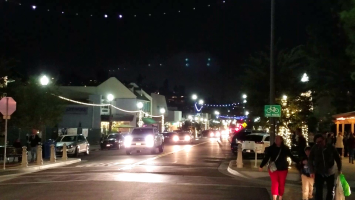
Printer-friendly version East County New Service December 8, 2017 (La Mesa) – Paul Kruze provided these photo of La Mesa’s holiday tree and street lighting,illuminated at the “La Mesa Shimmer” event. Shops along La Mesa Boulevard are also bedecked with holiday trim, just in time for the start of La Mesa’s annual Holiday in the Village celebration this Saturday, December 9th from 10 a.m. to 10 p.m. and Sunday, December 10th from 10 a.m. to 6 p.m. Guests can stroll through the streets of La Mesa’s historic downtown to enjoy live music and dance, cozy fires, craft vendors, food, and a kids’ area with holiday movies and activities. For more information, you can visit http://lamesavillageassociation.org/. Grossmont Center also has holiday decor, including the tree, left. Printer-friendly version
READER’S EDITORIAL: WHY ARE CALIFORNIA’S HOMES BURNING? IT ISN’T NATURAL DISASTER, IT’S BAD PLANNING

Printer-friendly version By Richard Halsey Photo courtesy ECM news partner 10 News December 8, 2017 (San Diego) – Large, high-intensity wildfires are an inevitable and natural part of life in California. The destruction of our communities is not. But many of the political leaders we elect and planning agencies we depend upon to create safe communities have failed us. They have allowed developers to build in harm’s way, and left firefighters holding the bag. The fires raging in Los Angeles County and Ventura are an urgent signal that we need to start asking the hard questions — about the true cost of expanding the local tax base with new residences in high fire hazard zones. We need to stop having the same conversation over and over again, a conversation laced with non-sequiturs and focused on outdated, ineffective solutions. The devastating loss of life, the destruction of so many family homes, and the dangers faced by those who protect us demand nothing less. Some blame the current rash of wildfires on dead trees in forests—even if those fires are nowhere near a forest, or dead trees. (Members of Congress seem to have bought this explanation and they’re now pushing a bill sponsored by Rep. Bruce Westerman [R-Ark.] that would encourage more logging in the West.) Some blame climate change, claiming, for example, that rising temperatures are responsible for the devastating Tubbs fire in Santa Rosa in October — despite the fact that a bigger and just as fierce fire burned much of the same area in 1964. (Climate change is making our fire seasons worse, but it isn’t responsible for every big fire.) Yet others blame firefighters for creating dense stands of chaparral in fire suppression efforts—when that’s the only way chaparral naturally grows, dense and impenetrable. The standard procedure to reduce wildfire risk is to clear habitat. We have spent millions of dollars doing this for nearly a century. Nevertheless, our homes keep burning. That’s because while vegetation management such as fuel breaks and prescribed burns can help during non-extreme fire events, they do little to suppress extreme events. But if anyone questions vegetation management in the backcountry, the typical response is that the projects will work as designed for 90th percentile weather conditions. That’s absurd. Imagine if we designed buildings to withstand only 95th percentile earthquake movements, or what you would feel as a result of a magnitude 2.5. We need to protect communities from fires that actually do the damage. How do we do this? As University of Colorado geographer Gregory Simon has observed, since we are choosing to spread cities farther and farther out into wildland areas, we need to recognize that fire disasters aren’t natural, they’re social. And they require social solutions. Planning agencies need to push back against pro-development forces in government, whose willingness to build in known fire corridors borders on criminal neglect. The recent devastation of the community of Fountaingrove in Santa Rosa, for example, was both horrible and predictable. (The area has now burned twice in 53 years.) Local leaders need to restrict development in such areas. In the smaller picture, local governments need to impose strict fire codes in new communities throughout California, require older communities to retrofit their properties, and enforce proper defensible space regulations. That means 100 feet of thinned vegetation, not bare ground. Hundreds of feet of bare ground make a home the target for wind-driven embers. Such policies would cost significantly less than the $9.4 billion wildfire-related claims submitted statewide as of Friday. We also need to examine the best practices of other fire-prone regions. Communities in Australia often install external, under-eave/rooftop sprinklers, which have proven quite effective in protecting structures during wildfires. (Australians understand that wet homes do not ignite.) Such systems should be standard in all new developments in high fire hazard zones. It is likely they would have protected many of the homes consumed in Ventura’s Thomas fire this week. Agencies like Cal Fire need to begin addressing the question, “How do we protect lives and property?” rather than “How can we stop a wildfire?” Right now, Cal Fire is focused on the latter, with its misguided Vegetation Treatment Program. A focus on the former would mean at least noting land-use problems in planning documents. It would mean spending as much time and money on helping people retrofit homes ason vegetation treatments. Communities including Idyllwild and Big Bear have taken advantage of FEMA pre-disaster grants to replace flammable roofing and install ember-resistant vents. Such long-term solutions, unlike fuel breaks, do not require costly maintenance. Trees, shrubs, grasses or homes will all provide the necessary fuel for a wildfire. It’s part of California’s story. As we do with earthquakes and floods, our goal should be to reduce the damage when wildfires arrive, not pretend we can prevent them from happening at all. That mindset starts at the planning department, not the fire station. Richard Halsey is the director of the California Chaparral Institute. The views in this editorial reflect the views of the author and do not necessarily reflect the views of East County Magazine. To submit an editorial for consideration, contact editor@eastcountymagazine.org. Printer-friendly version
SDSU WOMEN’S BASKETBALL DROPS HEARTBREAKER TO UC IRVINE 67-65

Printer-friendly version Aztecs dealt first home loss of the year Source: goaztecs.com Photo: McKynzie Fort led all players with 16 points on Friday vs. UCI. Courtesy goaztecs.com December 8, 2017 (San Diego) – The San Diego State women’s basketball team suffered its first home loss of the season in heartbreaking fashion on Friday, falling to UC Irvine by a narrow 67-65 count in front of 4,148 fans at Steve Fisher Court. The Aztecs (5-3) led for over 35 minutes of contest, including a 65-63 spread in the waning moments before the Anteaters scored four points in the final 10 seconds to escape with the win. UCI (5-5) capitalized on 21 SDSU turnovers, outscoring the host school 29-16 off those miscues while maintaining a 36-20 advantage in the paint to help key its third straight victory. The Aztecs were paced by senior McKynzie Fort (Fontana, Calif.), who led all players with 16 points, while fellow classmate Geena Gomez (Huntington Beach, Calif.) chipped in 12 points of her own to go with a game-high seven assists. In addition, the SDSU cause was advanced by senior Khalia Lark (Irvine, Calif.) and freshman Najé Murray (Stockton, Calif.), who totaled 10 points each, while sophomore Naomi Ekwedike (Lagos, Nigeria) provided a spark with six points and five rebounds in 11 minutes of action. Ekwedike’s layup with 7:12 left in the fourth quarter gave the Aztecs a seemingly comfortable 58-49 advantage. However, the Anteaters methodically whittled away at the deficit, engineering a 14-4 spurt to take the lead. Lauren Saiki nailed a three-pointer while Deijah Blanks capped the run shortly thereafter with a steal and a layup to put the visitors up 63-62 with 1:56 remaining in the contest. Moments later, Fort hit a 15-foot jumper from the right wing and subsequently connected on one of two free throws after a Gomez steal to put the Scarlet and Black up 65-63 with 18 seconds left. However, the Anteaters quickly responded on the ensuing possession, as Blanks scored on a twisting bank shot with 10 ticks on the clock and was fouled. The following free throw was off target, but Yazzy Sa’Dullah was fouled after gathering the rebound with 2.6 seconds to go, sending UCI to the charity stripe. Sa’Dullah made the first of two attempts to put the Anteaters in front. The second shot also went awry, but Blanks collected the loose ball and was fouled once again before hitting one of two free throws with a scant 0.2 seconds remaining to account for the final margin. UCI was led by Brooke Bayman and Sabrina Englestad, who tallied 10 points apiece off the bench, while Andee Ritter recorded a game-high six rebounds. In addition, Tahlia Garza tied Englestad for game-high honors with three blocked shots. The Anteater reserves outscored the Aztec bench, 37-18. Buoyed by a 6-for-18 clip from beyond the 3-point arc in the first half, SDSU built a 35-27 lead by halftime. However, the Aztecs connected on two triples for the remainder of the contest, including a conversion by Lark at the 7:39 mark of the third quarter, which gave the Aztecs a 38-29 advantage. After Saliki hit a jumper to trim the margin to 47-44 with 1:37 left in the period, SDSU reclaimed an eight-point bulge following Fort’s old-fashioned three-point play and another basket by Lark. However, the Anteaters remained within striking distance after Dani Gugliemo buried a trey, which narrowed the gap to 52-47 by the end of the quarter. Neither team shot the ball particularly well on the afternoon, as the Aztecs connected on 40.7 percent of its field-goal attempts (24-59), while UCI drained 39.7 percent of its attempts from the floor (25-63). The Anteaters were just 12-18 from the foul line (66.7 percent) for the game, but managed an 8-for-11 effort in the pivotal fourth period. San Diego State continues its homestand on Sunday, Dec. 10 when it squares off against Hope International, starting at 1 p.m. PT. Printer-friendly version