
ON WILDFIRES’ ANNIVERSARY, CONCERN THAT RESIDENTS ARE LESS PREPARED
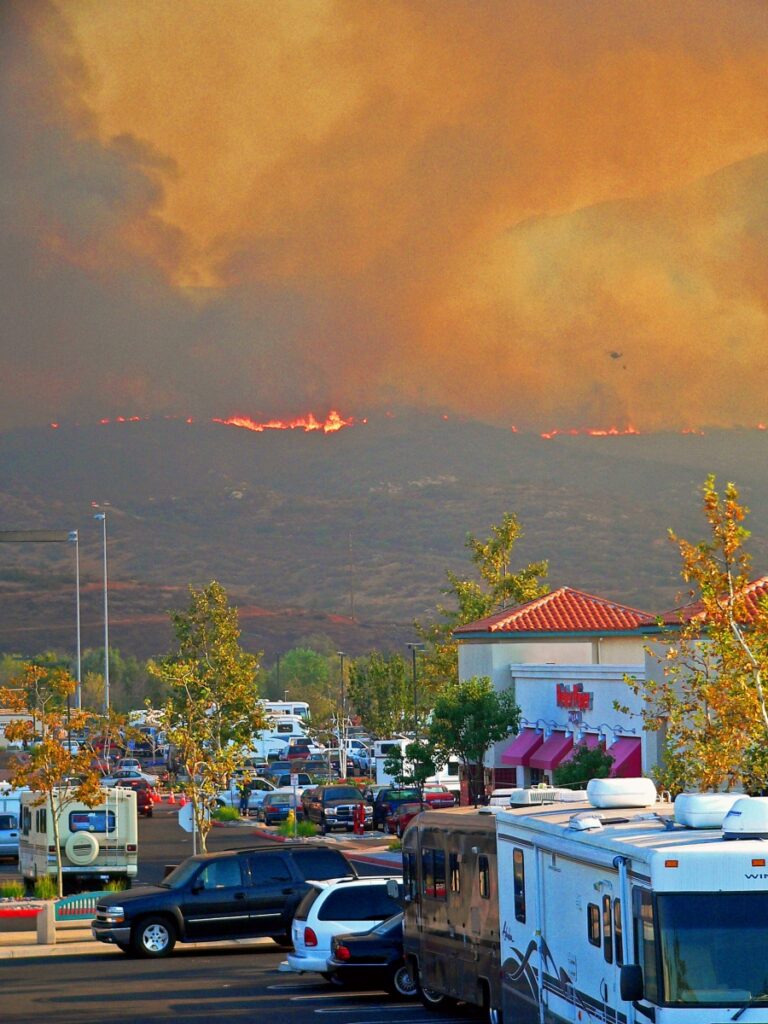
Printer-friendly version Photo by Miriam Raftery: 2007 Harris Fire in Rancho San Diego Video by José Eli Villanueva: https://youtu.be/kgnVYh3lQrM By Yvette Urrea Moe, County of San Diego Communications October 20, 2017 (San Diego) — As firefighters struggle to get deadly wildfires under control in Northern California, San Diego County and City officials marked the 10th anniversary of the 2007 Wildfires and called upon residents to do their part to prepare for another emergency. The officials addressed the topic at Gillespie Field in El Cajon with regional emergency partners. The message is especially timely as the San Diego region is facing peak fire conditions, Santa Ana winds, dried out grasses and vegetation in the backcountry, and high temperatures just as it did in 2007. Adding to the urgency, the County Office of Emergency Services commissioned a survey of nearly 1,100 residents earlier this year to ask them how prepared they were, so responses could be compared to a similar survey taken in 2007. The results showed that only half of residents asked this year were prepared to evacuate their home within 15 minutes, as compared to 74 percent who said they were ready in 2007. San Diego now has more locally stationed resources to fight a wildfire than any other region in the nation. While emergency officials cited major improvements in fire protection, coordination and resource sharing regionwide since the October 2007 wildfires, they said the personal preparedness survey results were concerning. “I wish I could say that all of the efforts that we have put together would prevent another major fire disaster in San Diego County but it won’t,” said Chairwoman Dianne Jacob, San Diego County Board of Supervisors. “We are far better prepared to fight that fire and the goal is to put it out while it’s still under 10 acres, but it will happen again. We don’t know when, but let’s be prepared.” Residents were encouraged to create a personal disaster plan, practice evacuating with their family, register all cell phones with AlertSanDiego, talk with neighbors, and take steps around their home to create defensible space — except when it is too risky to operate power equipment outside because it might spark a fire. Perhaps one of the most heartfelt pleas for personal preparedness came from Michelle Grimaldo, who lost her home in the 2007 Wildfires. She fought back tears at times recounting how she and her husband and mother had to evacuate twice, once in the middle of the night. They parked in a cleared field with the fire burning all around them. Grimaldo said she was convinced they were going to die that day and they all hugged as if they were saying goodbye. Yet, they survived. “The tragic fires up north reiterated to my husband and I that we need to be vigilant, we need to be prepared, we need to have a plan,” Grimaldo said. “And I’ve been hearing that here right now, about defensible space, making sure you have your property cleared at least 100 feet — if you can, more. Get to know your neighbors, have a game plan for an escape, have an evacuation route–in case you do live on a road that only has one way out, what else are you going to do? “Give yourself a fighting chance if disaster strikes. Give the firefighters the best possible advantage to save your home. Listen to the police and firefighters when they tell you to evacuate. Don’t risk your life for things. Take it from us, things can be replaced,” Grimaldo said. The Witch Fire, Harris Fire and other blazes a decade ago killed seven people, gutted thousands of structures, burned 580 square miles and triggered the largest evacuation San Diego County has ever seen. The first fires ignited on Oct. 21. Tony Mecham, San Diego County Fire and CAL FIRE Unit Chief said the wildfire updates in Northern California reminded him of working as a commander during the Harris Fire in 2007. He reflected back on the fatalities, the three other firefighters who were critically burned, and evacuating 22 severely burned people on that incident in that first 72 hours. “This is the new norm we live in. Large devastating wildland fires which destroy communities and life and property have become the new norm or our new reality of what we’re dealing with. Fires are no longer just something that stays out in the backcountry,” said Mecham. “My concern is that the general public still looks on us as first responders as Plan A. We will never be your Plan A. We are the Plan B.” Mecham said Plan A is everybody taking personal preparedness steps and being ready to evacuate when needed. In addition to showing a declining level of readiness to evacuate in the 2017 citizen preparedness survey, only 38 percent said they have an emergency plan in case of a disaster, down from 50 percent in 2007. The County Office of Emergency Services is putting the finishing touches on the survey and expects to release the complete results next month. “We cannot stress that enough, the need to be prepared as an entire region, as families, and as neighborhoods,” said San Diego Mayor Kevin Faulconer. “We hope we are never faced with another crisis like we saw ten years ago, with those fires, but the only way to face that is to be prepared and to work together as everyone’s safety is at stake.” San Diego Fire Chief Brian Fennessey said the survey results that show personal preparedness has declined are not good news. “Complacency, flat out, is a killer,” he said. “Citizens need to prepare themselves in advance, not have a fire truck in every driveway. Many resources are available.” Residents can go to ReadySanDiego.org to learn how to prepare for wildfires, register for AlertSanDiego and learn how to download the SDEmergency App. Residents can also visit Ready, Set, Go! to learn what to do to get ready for wildfire. Printer-friendly version
PRE-ORDER YOUR RAIN BARREL FOR PICKUP NOV. 4 AT THE GARDEN IN EL CAJON
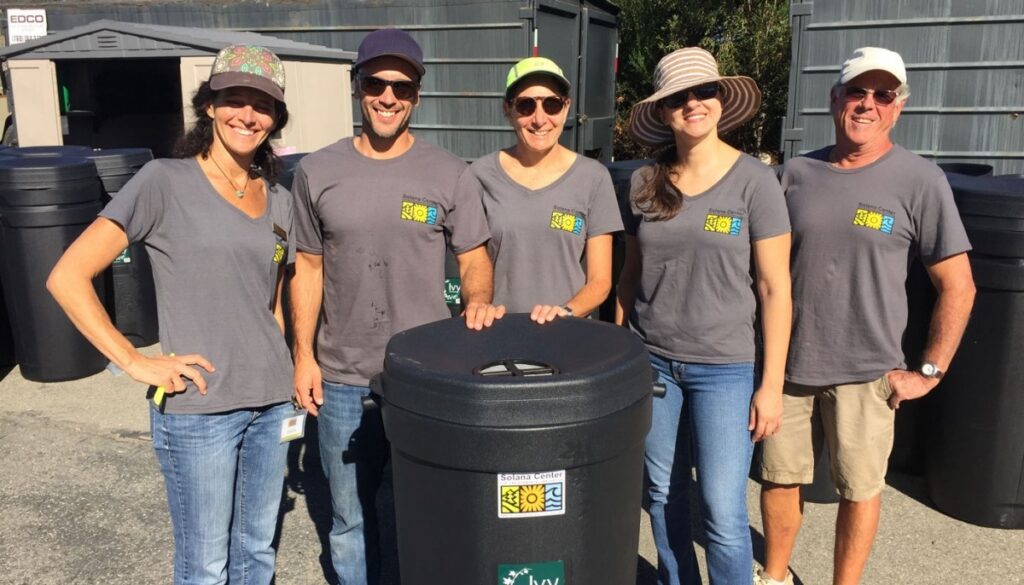
Printer-friendly version East County News Service October 20, 2017 (El Cajon) — Get ready to save the rain! Solana Center, in partnership with the San Diego County Water Authority, will hold a rain barrel pick up event in El Cajon on November 4, from 10 a.m. to 3 p.m. at the Water Conservation Garden during the annual Autumn Fest. East County residents can pre-order rain barrels (by Oct. 29) for pick up in El Cajon online at https://www.rainwatersolutions.com/products/solana-center The Water Conservation Garden is located at Cuyamaca College, 12122 Cuyamaca College Dr W, El Cajon, CA 92019. The discounted 50-gallon rain barrels cost $90 (retail price is $129). There is a $35 rebate through the San Diego County Water Authority’s Water Smart program, which brings the price to only $55 per rain barrel (that’s a 40% saving)! “Installing rain barrels is an easy way for people to make a difference!” said Jackie Bookstein, Community Engagement Coordinator at Solana Center. “You can get your rain barrels at Solana Center in Encinitas or during the Autumn Fest and Plant Sale at the Water Conservation Garden in El Cajon, which is a full day of family-friendly activities.” Last winter, the San Diego region received some much-needed rain. However, one wet winter doesn’t make up for four years of historic drought. Even after last winter’s record rainfall, local government and water officials are urging residents to use rain barrels to capture the rain from their rooftops, which will save thousands of gallons of reusable water. San Diego receives only 10 inches of rain on average each year; however, just one inch of rain yields 650 gallons per every 1000 sq. ft. of roof space. The public can view an informational video about rainwater harvesting and Solana Center’s rain barrel retail program online at https://www.youtube.com/watch?v=p1VcJtVaJRU. In addition to saving water and money by collecting rainwater, rain barrels also help protect our watershed and oceans. Urban water runoff is a major source of ocean pollution. Rain barrels allow gardeners to collect and reuse rainwater on their plants. Rainwater is healthier for plants because it is free of the salts, minerals and chemicals that are found in treated water. “An additional benefit of rainwater collection has to do with the connection between water and energy,” explained Jessica Toth, Solana Center’s Executive Director. “The largest single use of electricity in our region is for pumping water to us. Rainwater collection alleviates the need to transport water to our homes for landscaping.” Printer-friendly version
CA ATTORNEY GENERAL BECERRA ANNOUNCES SETTLEMENT WITH GENERAL MOTORS OVER DEFECTIVE IGNITION SWITCH

Printer-friendly version East County News Service October 20, 2017 (Sacramento) – California Attorney General Xavier Becerra has announced a $120 million multi-state settlement with General Motors Company (GM) over allegations that the company concealed safety issues related to defective ignition switches in GM vehicles. California will be receiving over $7 million and GM must cease making misrepresentations to consumers regarding unsafe vehicles. The settlement, reached among the attorneys general of 49 states and the District of Columbia and GM, concludes a multistate investigation into the auto manufacturer’s failure to disclose in a timely manner known safety defects associated with unintended key-rotation and/or ignition-switch related issues in several models and model years of GM vehicles. “What GM did is inexcusable – it took nearly a decade for the company to inform consumers that its ignition switches were defective,” said Attorney General Becerra. “We are holding GM accountable today for this blatant violation of the law, which threatened the lives of millions of Americans. All companies should be put on notice: the California Department of Justice has zero tolerance for those who put profits over people.” In 2014, GM issued seven vehicle recalls in response to unintended key-rotation and/or ignition-switch related issues, which have affected over 9 million vehicles in the U.S. The recalls involved a defective ignition switch which, under certain conditions, could move out of the “Run” position to the “Accessory” or “Off” position. If this occurs, the driver experiences a loss of electrical systems, including power steering and power brakes. If a collision occurs while the ignition switch is in the “Accessory” or “Off” position, the vehicle’s safety airbags may also fail to deploy, increasing the risk of serious injury or death in certain types of crashes in which the airbag was otherwise designed to deploy. The States alleged that certain employees of GM knew as early as 2004 that the ignition switch posed a safety defect because it could cause airbag non-deployment. However, GM personnel decided it wasn’t a safety concern and delayed making recalls. GM continued to market the reliability and safety of its motor vehicles which were equipped with this defective ignition switch. The states alleged that these actions were unfair and deceptive and that the automaker’s actions violated state consumer protection laws, including California’s Unfair Competition Law (Bus. & Prof. Code, § 17200 et seq.) and False Advertising Law (Bus. & Prof. Code, § 17500 et seq.) Under a stipulated judgment, which will be presented to the Los Angeles Superior Court for approval, GM shall: Not represent that a motor vehicle is “safe” unless they have complied with the Federal Motor Vehicle Safety standards applicable to the motor vehicle at issue. Not represent that certified pre-owned vehicles that GM advertises are safe, have been repaired for safety issues, or have been subject to rigorous inspection, unless such vehicles are not subject to any open recalls relating to safety or have been repaired pursuant to such a recall. Instruct its dealers that all applicable recall repairs must be completed before any GM motor vehicle sold in the U.S. and included in a recall is eligible for certification and, if there is a recall on any certified pre-owned vehicle sold in the U.S., the required repair must be completed before the vehicle is delivered to a customer. A copy of the consent judgment is attached to the electronic version of this release at oag.ca.gov. Printer-friendly version
“MILLION POLLINATORS GARDENS” CHALLENGE ISSUED BY NATIONAL WILDLIFE FEDERATION AS MONARCH BUTTERFLIES DISAPPEAR

Printer-friendly version By Kevin Patrick Allen, Public News Service Photo: Pollinators such as Monarch butterflies, certain birds and bats are an integral part of the health of natural ecosystems and agriculture. (Bill Barlow/Pixabay) October 20, 2017 (St. Louis) – If you’ve ever watched the process of a caterpillar becoming a vividly colorful Monarch butterfly, you probably have an appreciation for a challenge being issued by the National Pollinator Garden Network. The Million Pollinator Garden Challenge calls on everyone from horticulture professionals to schoolchildren and volunteers to help create and register one million pollinator gardens by the end of this year. Pollinator declines in recent decades have been extreme, and Mary Phillips, the senior director of the National Wildlife Federation’s “Garden for Wildlife” program, says Monarch populations have plummeted 90 percent in the last 20 years. “Monarchs are something people identify,” she says. “It’s an iconic butterfly that many of us have experienced in our childhood. So, that’s been an amazing motivator to get people to focus and engage around the pollinator issue.” National Garden Clubs, which is headquartered in St. Louis, is among the organizations joining in to encourage people from all walks of life to create their own pollinator gardens. Habitat loss, parasites and pesticides are among the causes of pollinator declines. Phillips notes that a Cornell study found one-third of all the food we eat is the direct result of pollinators. Phillips says the Garden for Wildlife program helps not only wildlife but also gives people a daily connection to the natural world, whether they create a garden in the city or the country. “It’s very small to very big,” she adds. “Some of these are creating tremendous acres of habitat and others are kind of connecting corridors across urban settings. So, both of those approaches are equally valuable.” Million Pollinator Garden Challenge participants can learn more and register their pollinator gardens online, plus they can take a look at the Challenge Map. Printer-friendly version
CAL FIRE INCREASES STAFFING IN PREPARATION FOR SANTA ANA WINDS
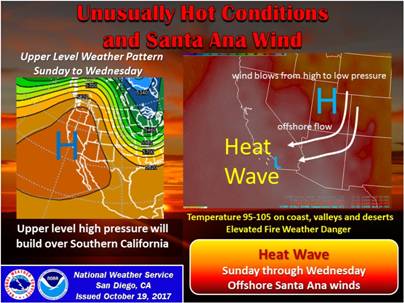
Printer-friendly version Source: CAL FIRE October 20, 2017 (San Diego) — As Firefighters in Northern California continue to make progress on 9 large wildfires burning across the State, the true magnitude of the devastation of loss of life and property is beginning to come to life. This recent series of fires is the deadliest in California State History. Since the start of the October Fire Siege on October 8, there have been 21 major wildfires that burned over 245,000 acres, forced 100,000 people to evacuate, destroyed 6,900 structures and sadly took the lives of 42 people. “As many of our firefighters begin to return back to the County, we now turn our focus to the critical fire weather conditions that will be moving into Southern California the next few days,” says CAL FIRE Captain and public information officer Kendal Bortisser. A fire weather watch is in effect for this weekend through early next week due to low humidity, high temperatures and gusty winds. A Santa Ana Wind event will develop on Sunday in San Diego County. Fuels throughout the County are very dry and will support significant fire activity should an ignition occur. “Though CAL FIRE has year round staffing in Southern California, these conditions have warranted adding additional resources for the duration of the Fire Weather Watch that bring an elevated threat of wildfire,” said Chief Tony Mecham, CAL FIRE San Diego Unit and County Fire Chief. He adds: All personnel will be called back to work. San Diego County Fire Reserve Firefighters are being utilized to increase staffing on all front line fire engines. Reserve Firefighters are covering 5 County Water Tenders Defense Support to Civilian Authorities, Immediate Response Agreement, has been enacted and CAL FIRE personnel are assigned to the Navy and Marine Corps in the event Military helicopters are needed. Cal Fire is funding the City of San Diego to staff a Strike Team of Wild land Fire Engines for the weekend. Funding is also supporting the North Zone to staff a Strike Team of Wild land Fire Engines for the weekend. CAL FIRE has also made contact with CONOFOR (Baja Mexico version of CAL FIRE) and is prepared to use its agreement with Mexico if needed. CAL FIRE has opened Brown Field Reload Base will be bringing in two large air tankers CAL FIRE is asking everyone to be extra cautious during the heightened fire danger period in order to prevent wildfires. One Less Spark means One Less Wildfire. For more fire prevention tips visit www.PreventWildfireCA.org and for evacuation tips visit www.ReadyForWildfire.org. and www.ReadySanDiego.org Printer-friendly version
CA ATTORNEY GENERAL SEEKS EMERGENCY INJUNCTION TO HALT TRUMP FROM CANCELING HEALTH INSURANCE SUBSIDIES
Printer-friendly version By Miriam Raftery October 19, 2017 (San Francisco) — President Donald Trump’s executive order to cancel cost-sharing subsidy payments required by the Affordable Care Act passed by Congress is being challenged in court by California Attorney General Xavier Becerra. Becerra has filed a motion asking the court to compel the federal government to “follow the law and pay the subsidies that millions of Americans rely on to lower the out-of-pocket costs in their insurance plans,” according to a press release issued by his office. Becerra states, “The Trump Administration is willingly breaking the law by refusing to make required payments that keep healthcare affordable for millions of Americans. It is taking active steps to sabotage the Affordable Care Act. No one deserves to live with this imposed medical uncertainty. The cost-sharing subsidy payments protect Americans from being a paycheck away from bankruptcy. Nineteen Attorneys General from California to Pennsylvania refuse to stand for this Administration’s repeated efforts to ignore the rule of law and deny Americans access to basic healthcare.” The Affordable Care Act’s mandatory cost-sharing subsidy payments help working families access more affordable healthcare coverage by helping individuals with incomes between $11,880 and $29,700 enroll in plans with lower deductibles, copayments or coinsurance, reducing their out-of-pocket costs. The Republican-led Congress has repeatedly tried to repeal the Affordable Care Act, or Obamacare, but has failed to muster enough votes to do so. Thus, Obamacare remains the law, and it will now be up to a court to determine whether the President has the power to unilaterally undermine an act of Congress. Meanwhile, a bipartisan coalition in Congress is working on a new healthcare reform bill that would keep intact these subsidies, but also give states flexibility to adjust rules and allow skimpier bare-bones plans to be purchased by residents including seniors at lower costs, but with lesser coverage. Businesses could also pool resources to purchase plans across state lines. Just last week, before filing the emergency temporary restraining order request Attorney General Becerra led a coalition of 19 state attorneys general (including the District of Columbia) in suing the Trump Administration over its abrupt decision to sabotage the Affordable Care Act by refusing to make the cost-sharing subsidy payments by the October monthly deadline. More than six million Americans benefit from the cost sharing subsidies. Without the funds, millions stand to lose their health insurance coverage. The Affordable Care Act’s mandatory cost-sharing subsidy payments help working families access more affordable healthcare coverage by helping individuals with incomes between $11,880 and $29,700 enroll in plans with lower deductibles, copayments or coinsurance, reducing their out-of-pocket costs. The Republican-led Congress has repeatedly tried to repeal the Affordable Care Act, or Obamacare, but has failed to muster enough votes to do so. Thus, Obamacare remains the law, and it will now be up to a court to determine whether the President has the power to unilaterally undermine an act of Congress. Meanwhile a bipartisan coalition in Congress is working on a new healthcare reform bill that would keep intact these subsidies, but also give states flexibility to adjust rules and allow skimpier bare-bones plans to be purchased by residents including seniors at lower costs, but with lesser coverage. Businesses could also pool resources to purchase plans across state lines. Just last week, before filing the emergency temporary restraining order request Attorney General Becerra led a coalition of 19 state attorneys general (including the District of Columbia) in suing the Trump Administration over its abrupt decision to sabotage the Affordable Care Act by refusing to make the cost-sharing subsidy payments by the October monthly deadline. More than six million Americans benefit from the cost sharing subsidies. Without the funds, millions stand to lose their health insurance coverage. Printer-friendly version
A GOLD STAR MOTHER’S LETTER TO PRESIDENT TRUMP
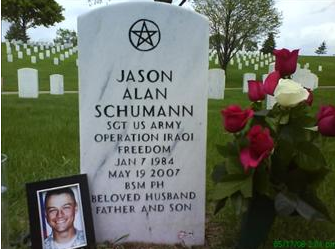
Printer-friendly version After President Donald Trump drew criticism for not calling families of U.S. soldiers killed in Niger, he accused former presidents of not calling fallen soldiers’ families to offer condolences, though all other presidents did so. Trump then insulted the widow of Army Sgt. La David Johnson, saying he “knew what he was signing up for,” failed to praise Johnson as a hero, and left her crying after his call. Trump called the Congresswoman who reported his remarks a liar, even after the slain soldier’s mother confirmed the Congresswoman told the truth. Other families of soldiers killed confirm Trump never called them. Now Gold Star mother Candie Glisson has penned this open letter to the President, originally published by Common Defense PAC: October 19, 2017 (Washington D.C.) — My son was killed in Iraq. Here’s my message to Trump: On October 4th, 2017, four of our troops were killed in an ambush in Niger. For twelve long days, we didn’t hear a word from this Commander in Chief. Twelve days. Total silence. On Monday, he said he was “too busy” to pay respects to the Gold Star families (although he had plenty of time for golfing, sabotaging our health care, and trying to ban Muslims). Finally, last night, he called one of the grieving mothers. But instead of offering sympathy and remorse, he callously said that her son, Sgt. La David Johnson, “knew what he signed up for.” This is beyond the pale, even for Trump. When my son, SGT Jason Alan Schumann, was killed in Iraq 10 years ago, George W. Bush sent me a heartfelt letter. Now we have a president who degrades our fallen heroes, then calls their mourning families liars on Twitter. This goes so far beyond party politics. Trump is a dangerous liar. He fabricated the truth on national television by claiming no previous president ever reached out to Gold Star families. He tried to use fallen heroes to score political points. Now, after saying La David Johnson should’ve known better, Trump is accusing a Gold Star widow and a Gold Star mother of making the story up. When George W. Bush contacted me, he didn’t brag about it. He did so quietly. When Barack Obama met fallen soldiers at the airbase in Dover, he didn’t take to Twitter or turn it into a politicized photo-op. I may have disagreed with Bush, but at least he was respectful, humble, and dutiful. To say I’m sickened by Trump’s remarks would be an understatement. And I know, with certainty, that my son would be utterly disgusted too. Not just by Trump’s remarks this week, but by Trump’s entire platform of bigotry, hate, and divisiveness. That isn’t the kind of country he swore an oath to protect. That’s not the kind of country he fought and died for. Thank you, Candie Glisson Gold Star mother Glisson is the mother of Army Ranger Sgt. First Class Jason Alan Schumann, who was killed a decade ago in Iraq. The views in this editorial reflect the views of the author and do not necessarily reflect the views of East County Magazine. To submit an editorial for consideration, contact editor@eastcountymagazine.org. Printer-friendly version
60 TO 80% OF MIGRANT WOMEN AND GIRLS ARE RAPED ON WAY TO U.S., STUDIES FIND, BUT TRUMP ADMINSTRATION BLOCKS ABORTIONS FOR DETAINEES

Printer-friendly version Federal judge rules action violates Constitutional rights of detained immigrants By Miriam Raftery October 19, 2017 (San Diego) – A federal judge on Wednesday ruled that the Trump administration has violated the rights of a 17-year-old undocumented immigrant detained in Texas by refusing to allow her to have an abortion. The Trump administration has appealed. “Failure to comply with this order may result in a finding of contempt,” wrote D.C. Circuit Judge Tanya Chutkan. A 2014 study by Fusion found that a staggering 80% of women and girls from Central America who cross into the U.S. from Mexico are raped along their journey here. An earlier report by Amnesty International put the estimate at 60%, Huffington Post has reported. Many of these women flee their homelands to escape violence and sex trafficking risks, only to suffer the same fate en route to the U.S. at the hands of smugglers. Yet the Trump administration, in a change from the Obama administration, has been prohibiting women and even young teens from obtaining access to abortions. Scott Lloyd, director of the Office of Refugee Resettlement which is responsible for unaccompanied minors apprehended crossing the border, wrote in a March email that federally funded shelters “should not be supporting abortion services pre or post-release; only pregnancy services and life-affirming options counseling” except in medical emergencies. The teen in the lawsuit is in her 15th week of pregnancy and was picked up crossing the border in early September, over a month ago, when she was in the first trimester. She is identified only as “Jane Doe” and her country of origin is not listed. She had funds to pay for her own abortion and was not asking for federal funding for the procedure. The clock is ticking, since Texas bans most abortions after 20 weeks. Either way, her future seems bleak; if deported she will return to the harsh conditions she once fled from —potentially now with an unwanted child to care for, a child who could also be at risk of dangers that compelled the teen girl to leave home. The judge ruled that the Trump administration violated the law not only by denying the teen’s request for an abortion, but also notifying her parents and ordering her to a Christian counseling center that sought to talk her out of the abortion. The judge has not yet acted on a request by the American Civil Liberties Union (ACLU), which is representing the girl, to expand the judicial ruling to all minors in federal custody, the Washington Post reports. The Trump administration had argued that illegal immigrants are not entitled to Constitutional protections, but the judge rejected that argument and found that the girl would suffer “irreparable injury,” including health risks if the government blocked her from terminating her pregnancy. Judge Chutkan also banned the government from retaliating against the teen for her decision. Printer-friendly version
BROWN SIGNS BILL TO LET SAN DIEGO WAIVE BUILDING CODES FOR THREE YEARS TO PROVIDE SHELTER FOR HOMELESS
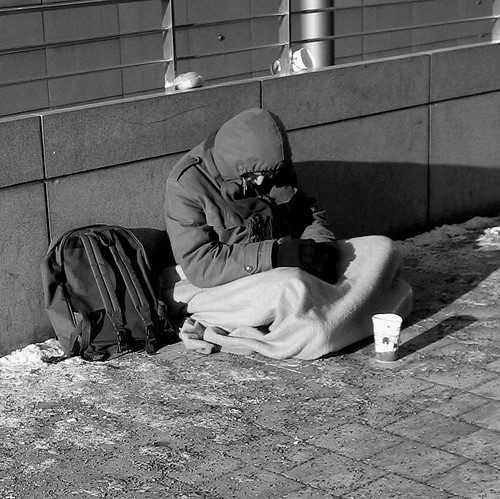
Printer-friendly version By Miriam Raftery October 19, 2017 (San Diego) – Governor Jerry Brown has signed Assembly Bill 932 authorizing suspension of state and local building standards for three years upon declaration of a shelter crisis in specified areas, including the City of San Diego, in order to create homeless shelters on an emergency basis. California has over 118,000 homeless people—the largest homeless population in the nation, fueled in part by a housing affordability crisis. The City of San Diego has 5,619 homeless residents, with 3,231 unsheltered. Los Angeles has the most homeless in the state – over 34,000 and more than 25,000 of those are unsheltered, according to a press release by Assemblyman Phil Ting, author of the bill. In his signing statement, Brown says, “The thousands and thousands of men and women living on our streets are looking to the leaders of these communities for decent shelter and a place of dwelling, not abandonment.” The Governor added that this bill, in combination with others recently enacted, “presents a unique opportunity for creativity and compassion with respect to the growing number of homeless people. Don’t let them down.” The Governor urged the cities and counties included in the order to use the extraordinary grant of exception “wisely and expeditiously.” The new law applies to the city of San Diego, but not San Diego County. It also includes the cities of Berkeley, Emeryville, Los Angeles, Oakland, or San Diego, the County of Santa Clara, and both the City and County of San Francisco. Emergency housing may include homeless shelters for the homeless located or constructed on any land owned or leased by a city, county, or city and county, including land acquired with low- and moderate-income housing funds. Despite waiving some requirements, these cities and counties must still provide minimum health and safety requirements, the bill mandates. Printer-friendly version
LAKE JENNINGS CLOSED TO RECREATION OCTOBER 30-NOV. 16

Printer-friendly version Source: Helix Water District October 19, 2017 (Lakeside) — Lake Jennings – the lake, not the campground — will be closed to all activities, including fishing and boating, from October 30 to November 16 so Helix Water District can study the lake’s hydraulics. Helix is working with Scripps Institution of Oceanography to conduct the testing. The goal is to gather data to support development of a computer model that can be used to predict the lake’s hydraulic mixing actions. The data and computer model will assist Helix in future studies. Scripps will use a dye approved by the U.S. Environmental Protection Agency as part of the testing process, and it may be possible during testing to see a slight color in the lake water that can range from pink to red. The dye is not harmful and will dissipate over the course of the testing period. Activities not allowed during testing include use of the lake for Helix’s drinking water supply, as taking water from the lake for treatment could influence its hydraulics. Printer-friendly version