
AMERICAN MEDICAL ASSOCIATION: MILLIONS WILL LOSE HEALTH INSURANCE IF CONGRESS PASSES REVISED HEALTH CARE BILL TOMORROW

By Miriam Raftery May 3, 2017 (Washington D.C.) – House Republican leadership is pushing for a rushed vote on a revised proposal to repeal the Affordable Care Act, or Obamacare and replace it – without bothering to wait for a nonpartisan Congressional Budget Office (CBO) analysis. But the American Medical Association (AMA), the nation’s largest doctors’ organization, has sent a Tweet warning patients to contact their representatives and urge a no vote. “Proposed changes to the health care bill tinker at the edges without remedying its fundamental failing – that millions will lose their health insurance as a direct result of this proposal,” Dr. Andrew Gurman, AMA president, warns. The CBO analysis, due out in two weeks, will assess costs and impacts of new amendments, including one that will make it harder and costlier for people with pre-existing conditions in some states. The last time the GOP tried to pass a repeal measure, the CBO warned that 24 million Americans would lose healthcare coverage. This time, members will be voting without knowing how many will be dropped from coverage under their revised plan. House minority leader Nancy Pelosi (D-California) blasted the hasty action. “Forcing a vote without a CBO score shows that Republicans are terrified of the public learning the full consequences of their plan to push Americans with pre-existing conditions into the cold,” she said. Rep. Fred Upton (R-Mich.) added an amendment allowing $8 billion over five years to help people with pre-existing conditions in states that opt to repeal Obamacare protections that prevented insurers from denying coverage to sick people or those with preexisting conditions. “Is it enough money? I don’t know,” he admitted, The Hill reports. Washington Post reports that multiple organizations that have looked at the bill indicate people will preexisting conditions will be paying a lot more under the GOP plan than under Obamacare, at least in some states. The Kaiser Foundation has indicated that a high-risk pool created by the ACA that covered a mere 100,000 people cost $2 billion over just one year, so it’s not credible to believe that a larger pool to cover more people over five years could possibly be done for the $8 billion proposed. “For subsidies to cover 68 percent of enrollees’ premium costs, as ACA tax credits do now in the individual market exchanges, the government would have to put up $32.7 billion annually,” Emily Gee, a health economist at the progressive Center for American Progress, wrote in an analysis of the plan, the Washington Post reports. “Even after applying that subsidy, high-cost consumers would still owe $10,000 annually toward premiums.” Congressman Darrell Issa (R-San Diego) told reporters in the Capitol who asked how he plans to vote on the bill, “None of your business.” Asked if his constituents deserve to know how he will vote by a reporter from The Hill, Issa fired back, “You’re not a constituent,” then turned away and entered an elevator. The bill also still has many other items that drew strong objections the first time the GOP tried to introduce it, when it was withdrawn for not enough support even from moderate Republicans. But House Speaker Kevin McCarthy says he has enough votes in the House for passage, with help from conservatives in the Freedom Caucus, the Washington Post reports. If the House passes the bill, it will advance to the Senate, where amendments could be made and a reconciliation measure sent back to the House.
QUESTIONS REMAIN ABOUT POSSIBLE RACIAL TARGETING IN MASS SHOOTING
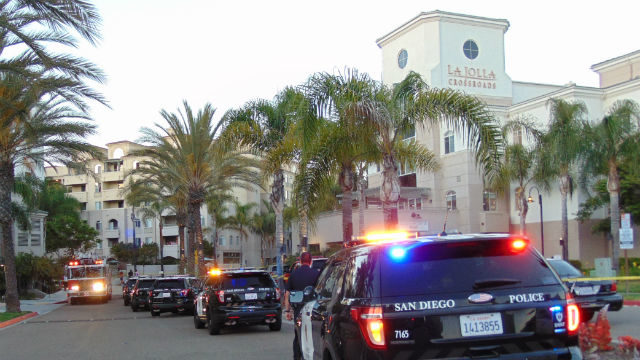
By Chris Jennewein Reprinted from Times of San Diego, a member of the San Diego Online News Association Emergency vehicles outside the La Jolla Crossroads apartments on Sunday. Photo by Chris Jennewein May 3, 2017 (San Diego) — City Councilmember Barbara Bry and the chair of the San Diego Democratic Party questioned Wednesday whether the University City shooter was racially targeting his victims on Sunday. Both called for a thorough and transparent investigation of the shooting that left one person dead and seven wounded at the La Jolla Crossroads apartment complex. “The fact that almost all of the victims are people of color cannot be ignored,” said Bry. “The survivors of this attack have spoken out and believe that people of color were targeted by the shooter.” Police Chief Shelley Zimmerman said Monday there was no reason to believe the shootings by distraught auto mechanic Peter Selis were racially motivated. He lived at the apartment complex and had just broken up with his girlfriend. “There is zero information to indicate that race played a factor in this terrible and horrific crime,” Zimmerman said. “The victims were targeted for no other reason but their mere presence in the vicinity.” San Diego Democratic Party Chair Jessica Hayes said Zimmerman was too quick to rule out a possible racial motivation. “A reasonable human being on hearing the witnesses’ statements would naturally consider if racism was a key decision-making factor in the shooter’s choice of victims,” Hayes said. “It is possible to be in debt, to be lovelorn, and to be racist. They are not mutually exclusive.” “The victims, their families, friends and loved ones, the communities, the city, the county, are all reeling, and all deserve to know about the thorough investigation conducted by the SDPD before the police chief announced there was absolutely no racism involved in his victim selection process,” Hayes added. Bry said she was “hopeful that the investigation will shed light on the motives behind this devastating attack.”
LIKE FATHER, LIKE SON – LOUIS AND EMMETT TILL
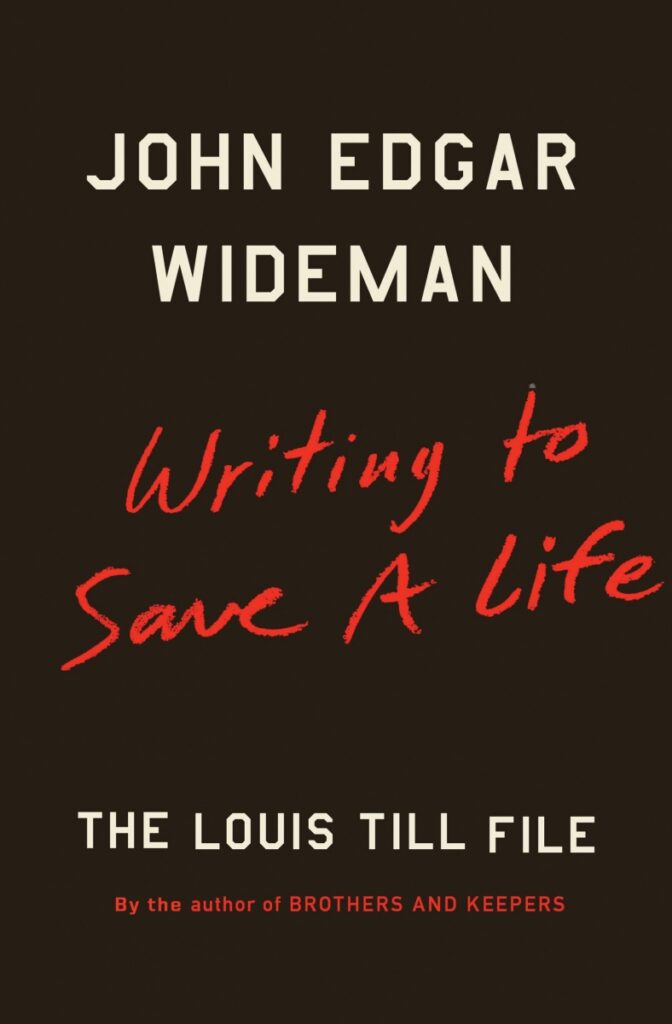
Writing to Save a Life: THE LOUIS TILL FILE, by John Edgar Wideman (Scribner, an Imprint of Simon & Schuster, Inc, New York, NY, 2016, 193 pages). Book Review by Dennis Moore “Unclassifiable and harrowing. The path through the very specific ‘American darkness that disconnects colored fathers from sons’ is found and lost and found again through prose that jumps and shimmers, punches and croons. This is one of those books virtually impossible to write…yet it has been written. And by a great American writer.” JOY WILLIAMS, author of Ninety-Nine Stories of God and The Visiting Privilege May 3, 2017 (San Diego) – John Edgar Wideman, has written an insightful and provocative book that is full of ironies; Writing to Save a Life: THE LOUIS TILL FILE. It is the story of Louis Till, the father of Emmett Till, the young boy from Chicago who was lynched in Mississippi allegedly for whistling at a white woman. Wideman’s book is the untold story of Louis Till, a man of color who suffered a miscarriage of racial justice a full decade before the infamous lynching of his son, Emmett. This really is about a cruel twist of fate and circumstance that is painful to envision. Wideman, is the author of Philadelphia Fire, Brothers and Keepers, Fatheralong, Hoop Roots, and Sent for You Yesterday, among others. He is a MacArthur Fellow and a member of the American Academy of Arts and Letters, and he has won the PEN/Faulkner Award twice and has been a finalist for the National Book Critics Circle Award and the National Book Award, as he divides his time between New York and France. The author has put his heart and soul in Writing to Save a Life, which becomes painfully obvious as one reads this well researched and documented account of the tragedy in life and between the father and son of Louis and Emmett Till. At times reading like investigative reporting by a major news source or magazine, Writing to Save a Life will keep and capture your attention throughout the book, and definitely remind the reader of man’s inhumanity to man. This is a brutal story. There are so many intriguing and historic layers to this well researched book by Wideman, such as the early relationships that he had with his mother and father, which he parallels with that of the Till family. It seems at time and throughout this deep and at times disturbing portrait of an American nightmare, that the author is living vicariously through that of Louis Till. An example of this is in the chapter on (“Graves”), in which Wideman states: “My fear of violent death. I’m afraid Louis Till might be inside me. Afraid that someone looking for Louis Till is coming to pry me apart.” In further regard to Wideman’s chapter on (“Graves”) in which he explores his own relationship with his mother and father – juxtaposed against that of Emmett Till and his mother Mamie Bradley and that of Emmett’s father Louis, he states: “Selfish. Just like him. Just like your father. Mean and selfish like him and not a soul in the world you care about besides yourself, my mother shouted, her face close enough to mine to touch.” It was just this such type of characterization of Louis Till that would lead to his undoing, at the end of a hangman’s rope, after a judge had given Louis Till the option of joining the army or go to jail, after Till had been accused of beating and abuse of his wife Mamie Bradley Till. If not for that, perhaps Louis Till would have been around for his son Emmett and Emmett could have also escaped his brutal fate. An evocative and personal exploration of individual and collective memory by one of the most formidable intellectuals of our time, Writing to Save a Life traces two generations of one family – civil rights martyr Emmett Till and his father, Louis – and the uniquely American brand of brutality that cut short both of their lives. In an earlier article in Esquire Magazine, titled A Black and White Case, Wideman makes a statement that encapsulates the essence and story of this book – which resonates with me: “If Louis Till had been around to school his son about the South, about black boys and white men up north and down south, would Emmett have returned safely from his trip to Money, Mississippi, started up public high in Chicago, earned good grades like I did, eluded the fate of his father, maybe even become president of the United States. But the flame of his father’s fate draws Emmett like a moth. Son flies backward and forward simultaneously like the sankofa bird because part of the father’s fate is never to be around to protect, advise, and supervise his son, the father and son to orphan each other always. Sons and fathers. An eternal cycle of missing and absence. Bright wings flutter like a dark room lit suddenly by a match.” Who knows, without the absence of Louis Till the young Emmett Till could have been the first black president, instead of Barack Obama – all from our hometown of Chicago. That irony resonates with me, as does so many others in Writing to Save a Life. Listen to and view former President Barack Obama’s speech on a Father’s Responsibility to their Children at the Apostolic Church of God in Chicago here. Emmett Till took a train from his home in Chicago to visit family in Money, Mississippi; a few weeks later he returned home dead. Murdered because he was a colored boy and had, allegedly, whistled at a white woman. His mother, Mamie Till, chose to display her son’s brutalized body in a glass-topped casket so the world could see “what they did to my baby.” Read transcript of Mamie Bradley Till’s courtroom testimony here. Emmett Till’s murder in Mississippi and his mother’s refusal to allow his story to