
SDSU WOMEN’S BASKETBALL SUFFERS CLOSE LOSS TO UT ARLINGTON

SDSU will play either Seton Hall or Central Connecticut State Sunday at noon Source: goaztecs.com press release Photo courtesy goaztecs.com November 26, 2016 (South Orange, N.J.) – The San Diego State women’s basketball team kept its game against UT Arlington within reach but ultimately fell to the Mavericks, 64-58, at the Seton Hall Thanksgiving Classic Saturday afternoon. UT Arlington, ranked No. 7 in ESPN’s Women’s Basketball Mid-Major Poll, improves to 4-0, while the Aztecs fall to 1-4. San Diego State opened the game with a flourish. Following a pass from Ariell Bostick, Kymberly Ellison nailed a three from the left corner 33 seconds into the game. The Mavericks were able to score nine unanswered points, but a Greenhouse jumper from the free throw line cut the lead to 9-5 with just under six minutes on the clock. Consecutive two-point field goals by McKynzie Fort and Monique Terry sliced the UTA advantage to two points at 11-9 with exactly four minutes to go. After a three by UT Arlington, SDSU out-scored its opponent, 6-5, for a 19-15 advantage at the end of the first quarter. The Aztecs turned the ball over three times to open the second frame, allowing UT Arlington to take a 23-15 lead. But the Scarlet and Black out-scored the Mavericks, 10-6, to give UTA just a four-point margin at 31-27 with two-and-a-half minutes remaining in the second. UT Arlington ended the frame on a five-point run for a 36-27 advantage. The second half saw the Aztecs again close the scoring gap with an 8-2 run and tighten up their defense, shutting out UT Arlington from a field goal until 5:13 remained in the quarter. On the first possession of the second half, Ellison picked off an errant UT Arlington pass, ran down the court and laid in the ball. She followed that up with a deep three for the 38-32 score. After a Maverick layup, Fort and Thorderson went for the give-and-go and Fort threw in the layup. Drawing a foul on the play, she made good on the ensuing free throw for the three-point play and 40-35 score. Bostick’s two made free throws and Terry’s layup kept the margin to four at 43-39. Ellison responded to back-to-back Maverick layups with her second trey of the quarter to trail 47-42. Following a pair of UT Arlington free throws, Greenhouse’s pump fake jumper with 1:08 remaining in the period kept the game close at 49-44. The Mavericks would add a late third-quarter layup for the 51-44 margin. But in the fourth quarter, the Aztecs were only able to drain three field goals on 10 attempts for the final 64-58 score. Ellison led the team with a season-best 13 points and three rebounds in 26 minutes logged. The Aztecs’ leading scorer, Fort, fouled out of the game with nine points as 5:51 remained in regulation. Team-leading rebounder Bostick exited the contest at 17 seconds with 12 points, five rebounds and a pair of fourth-quarter steals. Arantxa Gomez Ferrer had her first career game with multiple blocks (2), adding three rebounds and two points. San Diego State plays the loser of Seton Hall’s game against Central Connecticut State Sunday at noon. Box score Play by play
HEAR OUR INTERVIEW: LA MESA CHAMBER PRESIDENT MARY ENGLAND INVITES YOU TO GIVE BACK TO HELP MILITARY FAMILIES, CHILDREN AND SENIORS

November 22, 2016 (La Mesa)–La Mesa Chamber of Commerce President loves giving back to help people in need during the holiday season. This year, the Chamber has added military families to its list of beneficiaries to receive help this holiday season, along with seniors and children. Hear our interview with Mary England, originally aired on KNSJ radio, by clicking the audio link above to learn how you can help brighten the families for people in need in our community.To contact the Chamber, call (619)465-7700 or visit http://lamesachamber.net/.
RAIN, STRONG WINDS, HIGH SURF AND SNOW TO IMPACT REGION
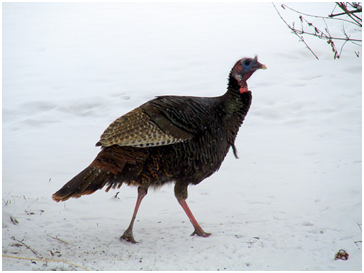
By Miriam Raftery November 25, 2016 (San Diego’s East County) – Rain, thunderstorms and high winds are forecast starting Saturday afternoon through Sunday evening to cap off Thanksgiving weekend. Up to three inches of snow is possible above 5,500 feet, with rain-slicked highways expected to slow holiday travelers in lower elevations. Wind gusts up to 35 miles per hour are also forecast inland, potentially reaching gale-force offshore with hazardous conditions for small craft and possibly larger vessels. Minor flooding of streams and low-lying urban areas are possible, as well as debris flows in recently burned areas. The storm could drop over an inch of snow in mountain areas, a half inch or more in coastal and valley areas, but only a trace in the desert. If you’re on the road this Thanksgiving weekend, icy conditions and snow are possible in mountains of San Bernadino and Riverside Counties. Snow is not expected to impact I-5 through the Grapevine or I-8 in San Diego’s East County.
TRUMP’S CABINET PICKS A MIX OF OUTSIDERS AND WASHINGTON INSIDERS

By Miriam Raftery November 25, 2016 (Washington D.C.) – President-Elect Donald Trump ran as an outsider, a TV celebrity and business mogul with no political experience, who pledged to shake up the status quo in Washington D.C. His cabinet appointees thus far reflect a mix of people outside the D.C. beltway as well as seasoned Washington insiders. But in reaching outside the halls of power to bring in outsiders to fill some key posts, Trump is drawing praise from key supporters but raising concern among critics for choosing some appointees who lack experience in relevant fields. Other appointees with relevant qualifications have drawn criticisms precisely because of their past actions or temperament. South Carolina Governor Nikki Haley is slated to become United Nations Ambassador, though she has no foreign policy experience, other than traveling abroad as Governor to promote investment in the state. An Indian-American, she does add diversity to the Trump cabinet, but if confirmed she may be the least experienced individual to hold the post. She has shown backbone in calling for removal of Confederate flags after a massacre at a black church in her state and holds pro-life and pro-business views. Betsy DeVos, Trump’s nominee as Education Secretary, has never worked in public education, never taught school, and does not have children who attended public schools. A major donor to the Trump campaign, she did head conservative groups focused on education reforms including vouchers and charter schools that draw money out of the public school system. Heirs to the Amway fortune, DeVos and her husband also head a foundation that led efforts to oppose gay marriage. Dr. Ben Carson, Trump’s opponent during the primary, is Trump’s preferred choice to lead the Department of Housing and Urban Development, though he has zero experience in HUD housing issues. Potentially, Carson or others lacking experience could make up for it by choosing experienced staff, but would not be hitting the ground running. Other nominees and appointees are unquestionably experienced. Trump chose Retired Lt. General Mike Flynn as his national security advisor, a job that does not require Senate confirmation. Flynn formerly served as director of the Defense Intelligence Agency for two years during the Obama administration, but was fired for what one Pentagon official described as a “disruptive” management style that included shouting at others. Trump also tapped Fox News analyst Kathleen Troia “KT” McFarland, to serve as deputy national security adviser. She served in various posts under former Presidents Richard Nixon, Gerald Ford and Ronald Reagan. Representative Mike Pompeo, Trump’s pick as director of the Central Intelligence Agency (CIA), serves on the House Intelligence Committee. A military veteran, he graduated first in his class from West Point and got his law degree at Harvard, where he served on the Law Review. He’s praised as bright and hard-working even by his critics. But he’s viewed by many as overtly partisan after his relentless investigations into Benghazi allegations against Hillary Clinton. He has supported broad surveillance powers and controversial interrogation techniques. Alabama Senator Jeff Sessions, Trump’s pick as Attorney General, once helped prosecute Ku Klux Klan members for murder as a U.S. Attorney but later failed to win Senate Judiciary Committee confirmation for a federal judicial position due to allegations that he had made racial remarks and opposed the Voting Rights Act. Steve Bannon, Trump’s pick as White House chief of Staff, is perhaps the most controversial appointee. Bannon took over as publisher of Breitbart media, turning the conservative site into what he described as a mouthpiece for the alt-right, a movement that has its roots in racism and anti-Semitism expanded to also include anti-establishment views. The founder of the alt-right movement was recently photographed celebrating Trump’s victory with Nazi salutes at a New York restaurant.
MOTORCYCLIST KILLED IN SANTA YSABEL

East County News Service November 25, 2016 (Santa Ysabel) – A 70-year-old Ramona man was killed this morning when the Honda motorcycle he was driving was struck by a Toyota Prius at the intersection of State Routes 79 and 76 in Santa Ysabel. According to Officer R. Tracy with the California Highway Patrol, the Toyota was traveling east on SR 76 had stopped at a stop sign. The driver had the right-of way and began turning left on SR 79, but did not see the motorcyclist driving south on SR-79 at 55 mph. The motorcyclist had no time to stop and struck the Prius. He was ejected over the top of the car, landing in the roadway. An off-duty San Diego Police officer arrived moments after the collision and initiated CPR, but was unable to save the man, who was pronounced dead by paramedics a short time later and transported to the Medical Examiner’s office.
HIGH TIME FOR QUESTIONS, ANSWERS AS PROP 64 PASSAGE PLACES MARIJUANA IN LIMELIGHT

By Thea Skinner November 25, 2016 (San Diego) – Proposition 64, the Adult Use of Marijuana Act (AUMA), approved by voters, legalizes recreational use of marijuana in California, where legal medical use continues for some two decades. Legalization of recreational pot is raising questions from cities, landlords, employers and marijuana users. Just what are the rights and limitations under California’s new law? The act legalizes recreational marijuana for persons 21 years of age or older, establishing sales and cultivation taxes. The proposition contains control, regulation and tax portions. Although legal in the state with limits, marijuana sales and transportation is illegal under federal law. Cities and counties may regulate marijuana sales under legalization. Key players are the state’s departments of food and agriculture, consumer affairs and public health – handling licensing, monitoring and collecting fees. Controlling the Weeds The League of California Voters urges residents to contact their city attorney for information on specific codes, regulations and policies. According to their Nov. 22 AUMA Facts and Answers Sheet “A person 21 years of age or older may possess, process, transport, purchase or give away to persons 21 years of age or older not more than 28.5 grams of marijuana in the non-concentrated form and not more than 8 grams of marijuana in a concentrated 3 form including marijuana products. If the AUMA passes, these activities will be lawful under state law and cannot be prohibited under local law.” Adults may grow up to six marijuana plants for use at a private residence, states Proposition 64. There is a maximum of six plants per household, no matter how many people reside there. Still, smoking marijuana in a public place is illegal in the state. Cities may ban delivery with ordinances updated to the three state departments. Any marijuana smoking or growing on private property may be banned by a landlord, state, or agency, said the League. Landlords hold the right of decision in accommodating medical smoking on private property. Under AUMA landlords are not required to accommodate medical marijuana patients, and may choose to follow tobacco bans on properties. The San Diego Union Tribune quoted Debra Carlton, senior vice president of public affairs at the California Apartment Association (CAA) Nov. 24: “The short answer is yes, a private property owner could prohibit the smoking of marijuana at his or her property,” Carlton said. “The landlords could also say yes, but they are allowed to say no and restrict it or ban it altogether.” Beginning Nov. 9 medical marijuana patients, many whom are disabled, may grow on private property seeking alleviation from pain and ailments. It is unclear if medical marijuana smoking is federally protected under the Americans with Disabilities Act (ADA), as laws vary based on jurisdiction. ADA does not override health and safety requirements established under federal laws, as marijuana smoke falls under public health and safety, according to the Equal Employment Opportunity Commission. The League cautions that under AUMA “local governments can reasonably regulate, but cannot ban the personal indoor cultivation” for recreational marijuana plants per private residence. Medical cultivation does not require a license “unless a city enacts an ordinance imposing a reasonable regulatory scheme that would preclude them from doing so before complying with the city’s regulatory requirements.” “Local governments may regulate or ban all personal outdoor cultivation. However, the AUMA includes language purporting to repeal any ordinance that bans personal outdoor cultivation upon the California Attorney General’s determination that nonmedical use of marijuana is lawful under federal law.” Wacky Tobacky gets Regulation Similarly, zoning regulations outlaw marijuana within 1,000 feet of a school, day-care center or youth center while children are present. Where state law already prohibits tobacco smoking, including restaurants and theaters, marijuana is illegal. Smoking marijuana in public is a fine of up to $100, so private residence use is permitted. Smoking pot in a place where tobacco smoking is prohibited or near a school may be a fine up to $250. On the roadways, fines and penalties are assessed for drugged driving and smoking marijuana while driving. A Drager DrugTest 5000, a type of saliva swab, may be used to check for drugged driving. Expansion of roadside tests is to be determined. Federal highway checkpoints such as Border Patrol stations or agricultural checkpoints continue to check for marijuana–and just one seed is considered a felony; transporting marijuana across state lines is also illegal. To transport, process, or sell marijuana, a state license is required. State agencies begin issuing licenses by Jan. 1, 2018 for a fee, still being determined, for processing and enforcement. Such licenses are issued through the California Department of Consumer Affairs, Bureau of Marijuana Control, which is drafting regulations. To run a dispensary, a background check is required with denial for felony convictions involving fraud, drug trafficking, violence, or selling drugs to a minor. Selling marijuana without a license may result in a misdemeanor with penalties up to six months in jail and $500 in fines, along with possible civil penalties. Recreational growers obtain licenses through the department of food and agriculture. Taxation with Representation Growers may undergo a cultivation tax by the state of $9.25 per ounce for flowers and $2.75 per ounce for leaves. Cities and counties may also impose grow taxes for services and enforcement. Dispensaries are required to tax sales of recreational marijuana with an excise tax of 15 percent starting Jan. 1, 2018. In a Nov. 17 press release, the California Board of Equalization, or BOE, declared medical patients exempt from marijuana sales taxation stating: “Sales of medical cannabis to those who have a medical marijuana identification card (MMIC) issued on a county-by-county basis by the California Department of Public Health (CDPH) and a valid government-issued identification card are now exempt from sales and use tax.” Products included in the release are: Medical cannabis, medical cannabis concentrate, edible medical cannabis and topical cannabis. BOE requires dispensaries to claim a deduction on their sales and use tax returns for exempt medical marijuana sales. Though