
EARTHTALK® : ARE 3D PRINTERS SAFE?

From the Editors of E – The Environmental Magazine March 7, 2016 (San Diego’s East County) — What are the health and environmental risks of using a 3D printer to make stuff? —Will Nady, Pittsburgh, PA As with most inventions, the thrill of the new has led to mass excitement surrounding 3D printing. The booming industry is expected to grow from nothing just a few years ago to some $4 billion by 2025. But some worry that our enthusiasm for 3D printing may be overshadowing some troubling health and environmental issues associated with the new technology. 3D printers heat plastic (usually a solid thermoplastic filament such as ABS or PLA) into a liquid and force it through a heated extrusion nozzle which in turn deposits it in thin layers onto a moving bed to form figures in predetermined shapes. But this process can send potentially harmful ultrafine particles (UFPs) and toxic fumes composed of volatile organic compounds (VOCs) into the air surrounding the machinery where users can breathe them in. In industrial settings, proper ventilation systems would be required and workers would have to wear protective gear to minimize exposure to similar UFP and VOC levels — but nowadays anyone can buy or borrow a desktop 3D printer and use it at home or in school without taking any extra precautions. One study, as reported on Phys.org, equated the effects of printing a small 3D item to smoking a cigarette indoors. Effects can include nausea and headaches, particularly for those with pre-existing heart or respiratory problems. A fully enclosed 3D printing system could mitigate exposure issues, but the major 3D printer manufacturers have yet to license the valuable patent held by one company to make this technology widely available. Until then, it’s up to users to make sure to operate desktop 3D printers in a well-ventilated area. Also, PLA, which is made from organic material such as corn starch or sugar cane, seems to be a safer choice than petroleum-based ABS as far as fumes are concerned. Besides the health effects, 3D printing can also be problematic for the environment. For starters, the plastic in 3D print material deteriorates significantly with each use, rendering recycling out of the question at this point. Another environmental hazard of 3D printing is the clear spike in electrical energy needed for the heating process. Using heat or lasers to melt plastic costs drastically more than traditional methods. When compared to injection molding, a 3D printer consumes almost 100 times the amount of energy on average to make an equivalent item. On the plus side, 3D printing is an “additive” technology, meaning it only uses the exact amount of plastic source material needed, so little if any is wasted. Also, 3D printed objects tend to be much lighter than their traditional counterparts; this saves money, fuel, and carbon emissions when it comes to shipping. But critics maintain that the weight savings isn’t enough to counteract the energy intensity of the 3D printing process. Whether we like it or not, 3D printing is here to stay, but only time will tell if the growing industry behind the phenomenon will be able to clean up its act as it enters mainstream. EarthTalk® is produced by Roddy Scheer and Doug Moss and is a registered trademark of Earth Action Network, a 501(c)3 non-profit. For more information, or to make a donation, check out www.earthtalk.org. Send questions to: question@earthtalk.org.
EARTHTALK®: WHICH NON-STICK COOKWARE IS HEALTHIEST?

From the Editors of E – The Environmental Magazine March 7, 2016 (San Diego) — Dear EarthTalk: I’m in the market for a new set of non-stick cookware for my kitchen, and I’m wondering which type is healthiest? –Rose Castillo, Santa Fe, NM Non-stick cookware cleans very easily and some health-conscious cooks appreciate that it requires less cooking oil than uncoated varieties. But the convenient cooking surface comes with potential risks when it is used with high heat. At temperatures exceeding 500 degrees Fahrenheit, the synthetic fluoropolymer coating in Teflon non-stick cookware begins to break down and release toxic perfluoroalkyl substances (PFASs) into the air. The Good Housekeeping Research Institute tested how quickly three different non-stick pans (lightweight, medium and heavy) heated up to 500ºF. Scrambled eggs cooked on medium heat for three minutes in a lightweight pan peaked at a safe 218ºF, but all three pans heated on high reached temperatures above 500ºF in less than five minutes. The cheapest, lightest pan of the three got there in under two minutes. Even with oil added, the cheapest pan surpassed the 500ºF mark in two and a half minutes. Cooking steak in a lightweight non-stick pan yielded a pan temperature exceeding 600ºF in less than 10 minutes. At temperatures of 660°F and above, non-stick coated pans may emit fumes strong enough to cause polymer-fume fever, a temporary flu-like condition with symptoms such as chills, headache and fever. While the fumes aren’t fatal to humans, they can kill pet birds. The Environmental Working Group (EWG), a non-profit focused on health and the environment, recommends cast iron and stainless steel cookware as safer options for stove top cooking, and oven-safe glass for baking. High-quality stainless steel pans are durable and can last a lifetime if treated with care. They also have greater searing and browning capabilities than non-stick pans while still being relatively easy to clean. Cast iron creates an even, intense heat that helps seal in juices and keeps foods moist. Cast iron is also more versatile than non-stick cookware, as it can go from stove top to oven. While cast iron is heavy and needs to be “seasoned”—a process that involves coating the pan in oil and baking it—it is a more affordable option than stainless steel. Cast iron is also scratch-resistant, so any kind of utensils can be used when cooking with it. While there are a growing number of new cookware options on the market, including ceramic options advertised as a zero-toxin, eco-friendly alternative to Teflon, EWG reports we don’t know enough about them yet to be certain they live up to such claims. Keep in mind that any non-stick cookware you currently own that’s not chipped and in good condition can still safely be used with foods that are quickly cooked on low or medium heat, like eggs or pancakes. “I personally do not advocate throwing away or giving away your non-stick pan,” says Simona Balan, senior scientist at the Green Science Policy Institute (GSPI). “That doesn’t solve the problem: If you throw it away, it will end up in a landfill from where it will leach PFASs into the environment, or even worse, it will get burned, which will release even more toxins.” But if you’re buying new cookware, the experts agree the best way to play it safe would be cast iron for stove top cooking and glass for baking. CONTACTS: Good Housekeeping Research Institute, www.goodhousekeeping.com/institute; EWG, www.ewg.org; GSPI, www.greensciencepolicy.org. EarthTalk® is produced by Roddy Scheer and Doug Moss and is a registered trademark of Earth Action Network, a 501(c)3 non-profit. For more information, or to make a donation, check out www.earthtalk.org. Send questions to: question@earthtalk.org.
UC ASKS RESIDENTS TO INSPECT CITRUS TREES FOR ASIAN CITRUS PSYLLID THIS SPRING
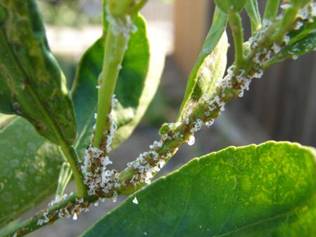
California citrus – both on farms and in home landscapes – face a very real threat from a disease that is spread by Asian citrus psyllid. Florida and Texas citrus is already suffering terribly. California may be able to avoid the same fate, if all residents and farmers do their part to combat the pest. A video on YouTube has details. View more high-resolution photos Photos: Asian citrus psyllids, malformed leaves and deformed fruits caused by the deadly disease carried by this pest By Jeannette Warnert, UC Agriculture and Natural Resources March 7, 2016 (San Diego’s East County) — A tell-tale sign of spring in California is a flush of new leaf growth on citrus trees. Because the feathery light green leaves are particularly attractive to Asian citrus psyllids (ACP), the leaves’ emergence marks a critical time to determine whether the pest has infested trees. “We encourage home citrus growers and farmers to go out with a magnifying glass or hand lens and look closely at the new growth,” said Beth Grafton-Cardwell, UC Agriculture and Natural Resources (UC ANR) citrus entomologist. “Look for the various stages of the psyllid – small yellow eggs, sesame-seed sized yellow ACP young with curly white tubules, or aphid-like adults that perch with their hind quarters angled up.” Pictures of the Asian citrus psyllids and its life stages are on the UC ANR website at http://ucanr.edu/acp. If you find signs of the insect, call the California Food and Agriculture (CDFA) Exotic Pest Hotline at (800) 491-1899. Asian citrus psyllids are feared because they can spread huanglongbing (HLB) disease, an incurable condition that first causes yellow mottling on the leaves and later sour, misshapen fruit before killing the tree. ACP, native of Pakistan, Afghanistan and other tropical and subtropics regions of Asian, was first detected in California in 2008. Everywhere Asian citrus psyllids have appeared – including Florida and Texas – the pests have found and spread the disease. A few HLB-infected trees have been located in urban Los Angeles County. They were quickly removed by CDFA officials. “In California, we are working hard to keep the population of ACP as low as possible until researchers can find a cure for the disease,” Grafton-Cardwell said. “We need the help of citrus farmers and home gardeners.” Grafton-Cardwell has spearheaded the development of the UC ANR ACP website for citrus growers and citrus homeowners that provides help in finding the pest and what to do next. The site has an interactive map tool to locate residences and farms that are in areas where the psyllid has already become established, and areas where they are posing a risk to the citrus industry and must be aggressively treated by county officials. The website outlines biological control efforts that are underway, and directions for insecticidal control, if it is needed. An online calculator on the website allows farmers and homeowners to determine their potential costs for using insecticides. There are additional measures that can be taken to support the fight against ACP and HLB in California: When planting new citrus trees, only purchase the trees from reputable nurseries. Do not accept tree cuttings or budwood from friends or relatives. After pruning or cutting down a citrus tree, dry out the green waste or double bag it to make sure that live psyllids won’t ride into another region on the foliage. Control ants in and near citrus trees with bait stations. Scientists have released natural enemies of ACP in Southern California to help keep the pest in check. However, ants will protect ACP from the natural enemies. Ants favor the presence of ACP because the psyllid produces honeydew, a food source for ants. Learn more about the Asian citrus psyllid and huanglongbing disease by reading the detailed pest note on UC ANR’s Statewide Integrated Pest Management website. Assist in the control of ACP by supporting CDFA insecticide treatments of your citrus or treating the citrus yourself when psyllids are present. Support the removal of HLB-infected trees. Contact: Jeannette Warnert, (559) 240-9850, jewarnert@ucanr.edu
CALIFORNIA SARDINE FISHERY CONTINUES COLLAPSE, LIKELY WON’T RE-OPEN THIS YEAR
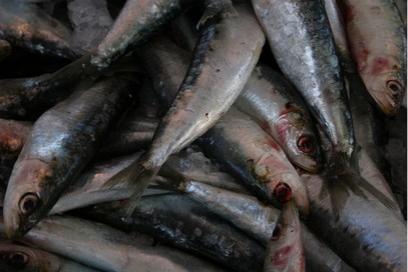
By Suzanne Potter, Public News Service The sardine population is continuing to collapse, according to a new assessment by the National Oceanic and Atmospheric Administration.(Photo: jasonwebber01/morguefile) March 7, 2016 (Los Angeles) — A new federal assessment shows the population of sardines off the West Coast has continued to plummet; it’s a third lower than last spring, even though the entire sardine fishery was closed in 2015. The news means the fishery is very unlikely to reopen until at least 2017. Geoff Shester, Ph.D., California campaign director for the nonprofit advocacy group Oceana, says scientists have been warning the Pacific Fishery Management Council and the National Marine Fisheries Service about severe overfishing for years. “They warned of a population collapse and the fishery management body basically turned a blind eye and continued moving forward with business as usual,” he says. “And now they’re blaming ocean conditions for this collapse.” Shester says the population was collapsing before ocean warming caused by El Nino. Scientists now believe the sardine population is down 93 percent since 2007, which is starving species such as sea lions and pelicans that feed on the sardines. In 2015, 3,000 sea lions washed up on shore and researchers estimate that in recent years 70 percent of sea lion pups have died. Shester says the situation would be even worse if they hadn’t closed the fishery last year, but it was still too little, too late. “When fishing pressure occurs during a decline, which is exactly what happened here,” says Shester. “It puts the stock at such dramatically low levels it impedes any recovery potentially for decades.” Shester says fishermen, mainly in Monterey, Santa Barbara and Los Angeles, have had to switch to catching squid and anchovies, which are now facing population pressures. From 2009 to 2014, California fishing crews brought in an average of almost $4 million worth of sardines per year.
CASI CIELO WINERY AT MANESS VINEYARD OPENS TASTING ROOM
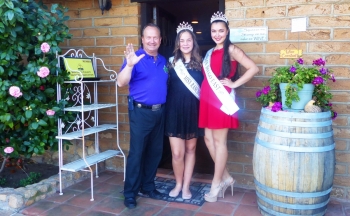
By Miriam Raftery March 7, 2016 (Jamul)—60 guests hoisted glasses last month to toast the grand opening of East County’s newest wine tasting room: Casi Cielo Winery, located at their historical adobe ranch house at Maness Vineyards atop a sunny hilltop in Jamul just off highway 94. It’s a dream that has been a long-time coming to fruition –a dream that began with two Italian immigrants back in the last century. As the afternoon sun bathes the adobe bricks and vineyards beyond in golden rays, it’s not hard to see how Casi Cielo (Almost Heaven) got its name. The winery offers a selection of hand-crafted wines made with 25% grapes grown at the estate and 75% grapes grown in San Diego County. With a motto “from juice to jelly,” Casi Cielo Farm & Vineyard also has a charming gift shop licensed under GregoArt.com featuring a new line of delicious vineyard jellies (served up over chocolate cheesecake—pure bliss) as well as colorful hand-crafted quilts by Kathy, vineyard lifestyle attire and more. The adobe house was built in 1973 using 17,000 bricks fired on-site, patterned after the old Spanish Mission church in San Diego. Paul Vesco, an elevator operator, and his wife, Marie, were the original owners. They formed a close friendship with Herman Salerno, a fellow Italian immigrant, opera singer and baker who dreamed of opening a winery. Salerno grafted olive trees on the side and made port—still aging in the winery’s secret barrel room. At a ribbon-cutting with San Diego East County Chamber of Commerce members, Greg Maness served up well-aged samples from a silver flask as a special treat for guests. “It all started here,” he says. Salerno and Vesco dreamed of starting a winery on site and planted some vines in the 1980s. But Vesco died before that dream could become a reality. So Salerno headed north, establishing Salerno winery in Ramona. He has been a mentor to other local vintners, including Maness—now a vineyard consultant as well as vintner. “In 2006, Maness Vineyards set out resurrecting what Paul Vesco could not finish,” says Maness, who has planted over a dozen varietals on the site. Wines currently offered including standards such as chardonnay and cabernet as well as some special blends such as Van Gogh’s Red Vineyard in a collectible bottle, a petite syrah old-school-style estate wine dedicated to the Vescos, and a meritage described as a “Corridor 94 Blend” of Heavenly Grenache, Merlot, Syrah and Cabernet Sauvignon. Soon to be released are a muscat blend, rudy cabernet, syrah (described as a “flirty girl wine” and a barbera, a rich vintners’ reserve. Maness is also considering adding a citrus wine to the mix. “Every year hence forth, we’re going to double our production,” Maness predicts. Maness has led a veritable revolution along highway 94, where wineries are spring up seemingly faster than wildflowers after the El Niño rains—mentored and tutored by Maness. Here at Casi Cielo, Maness makes the wines with help from John and Liz Keily, his wife, PJ, and sister-in-law, Kathy in this family-run operation. They’ve been bottling now for several years and this spring, got their license to open a tasting room—a costly and time-consuming proposition. They plan to remain a boutique winery (unlike some larger wineries locally stepping up to higher tiers of licensing). They want to keep the rural character, which includes a mini-farm with chickens, goats, and other livestock as well as a fruit orchard. The opening day celebration include special proclamations from Congress, the State Legislature, County, Chamber of Commerce and the San Diego County Vintners Association as guests toasted to the success of East County’s newest wine tasting venture. Strolling the grounds, which include a hilltop patio with views of sun-drenched countryside and distant mountains, you’ll also see informational vineyard signs celebrating the history of the vineyard and adobe estate, details on varietal grapes and winemaking as the art of winemaking is born again, revitalizing Casi Cielo, comleting Paul Vesco’s visionary dream. The new tasting room is open Saturdays by appointment fro 12 noon to 6 p.m.(and will eventually open Sundays,in a few months). Wine tasting costs $5, or complimentary if wine is purchased. To make an advance appointment, call Greg Maness at 619-251-1819. The winery is located at 3044 Colina Verde Lane in Jamul. For more information, visit the website at www.manessvineyards.com.
WINTER STORM BRINGS SEVERE THUNDERSTORMS, SNOW TO REGION

East County News Service March 7, 2016 (San Diego’s East County)–A strong line of thunderstorms will continue across the area this morning. Brief, heavy downpours, dangerous lightning, gusty winds, small hail and slick roads are expected this morning. The snow level could drop to 4,000 feet tonight, with several inches of snow above 4,500 feet. There is also a special marine warning that includes all coastal waters in San Diego County due to severe thunderstorms. Boaters are advised to move to shore until the storm passes. Remember to never drive across flooded roadways, and go indoors when there is lightning in your area. Sign up to receive free East County Wildfire & Emergency Alerts via email at the top right side of our homepage and you can also receive a free copy of our weekly newsletter. You can also follow EastCountyAlert on Twitter for brief text alerts on your mobile phone. We recommend all of the above, since you can’t know which form of communication will work best in a regional emergency.
HEAR OUR INTERVIEW: JONATHAN MARKOVITZ, ACLU, ON POLICE USE OF FORCE AGAINST MENTALLY ILL PEOPLE

Hear our interview with Jonathan Markovitz: https://www.eastcountymagazine.org/sites/eastcountymagazine.org/files/audio/2016/March/NewsmakerACLUJonathanMarkovitzPoliceUseofForce.mp3 March 7, 2016 (San Diego) –Last month, the American Civil Liberties Chapter of San Diego sent a letter to the U.S. Justice Department signed by 25 community leaders asking for an investigation of the San Diego Police Department’s use of force against mentally ill people. We sat down with Jonathan Markovitz from the San Diego ACLU for an interview on KNSJ, the Network for Social Justice. You can hear our interview at the link in this story. The letter was prompted by recent shootings including the fatal shooting of Fridoon Rawshan Nehad (photo, left), an Afghan army veteran who has suffered post-traumatic stress syndrome. The officer was mistakenly informed by a dispatcher that Nehad had a knife. But surveillance video showed that he was unarmed, walking down an alley carrying only a pen, when he was shot and killed. The video contradicted police statements that claimed Nehad was armed with a knife and charged the officer. The ACLU also voiced concern over District Attorney Bonnie Dumanis response, which included releasing a video of a knife-twirling suspect to imply that the office was in danger, when Nehad did not have a knife. The ACLU, in its letter and a press release, documented several additional cases where force was used against mentally ill suspects. The letter asks the DOJ to investigate possible civil rights violations and evaluate whether improvements may be needed in the SDPD’s policies, practices, training and supervision; and to provide technical assistance, advice and guidance to the City of San Diego. “Through such an investigation, the DOJ can significantly improve equality, fairness, and public safety throughout San Diego,” the ACLU concludes.