
SCREENPLAY ALLEGES COVERUP OF CEDAR, WITCH CREEK AND PARADISE FIRES

East County News Service July 28, 2015 (San Diego)—Circling the Wagons, a screenplay by Ed Clark, an electrical engineer and insurance investigator, alleges that an electrical design flaw caused the 2003 Cedar Fire as well as the 2007 Witch Creek and Paradise fires. Moreover, he contends the flaws have not been fixed and public safety remains at risk. San Diego Gas & Electric Company (SDG&E) denies those claims. In a letter sent to Sempra, Cal Fire and the California Public Utilities Commission, Clark further alleges that Sempra Energy and SDG&E “risked the lives of the people who live in San Diego County in their effort to obtain a rate increase from the CPUC” without fixing the design flaw. He also contends that Sempra cut deals to prevent expert witnesses from testifying in a recently settled lawsuit. Further, Clark claims that counsel for Sempra and SDG&E visited Jennifer Betts, a Witch Creek Fire victim, without an attorney present to attempt to pressure her to settle her lawsuit. Clark served as an expert witness in her case, which was settled. Stephanie Donovan, senior communications manager for SDG&E, in an e-mail to East County Magazine, says Clark “simply doesn’t have his facts straight. Fire investigators determined the Cedar Fire was started by a signal fire set by a lost hunter, the Paradise Fire was the result of one or more arsonists, and the Witch fire was related to the impact of extraordinarily strong Santa Ana winds on our overhead electrical system.” Donovan states the SDG&E “strongly disagrees with the theories Clark has published on multiple occasions soon after the 2007 fires. His conclusions reflect a lack of understanding of SDG&E’s electrical systems and have not been found valid by anyone else—including independent investigations by CPUC staff, CAL FIRE, and various other experts brought in as part of the fire litigation. To our knowledge, Clark stands alone in promoting theories that lack any factual or technical basis.” In February 2009, ECM published a report and exclusive interview with Clark. He took our editor to the site where he believed the Paradise Fire started and showed us two down guy wires without insulators connected by a single bolt, which he contended was dangerous and illegal. Clark initially made the discovery while working for a law firm representing Allstate Insurance. He said he asked his employer to meet with SDG&E about his findings and ask that they fix the installation to protect public safety. Clark said he had previously worked as an expert for SDG&E on cases, until he raised questions about the charred hardware he believed caused major fires. Clark also contends that SDG&E later “removed and destroyed” covers for the guy guards where evidence of arcing occurred. East County magazine, back in 2009, found two other electrical experts who agreed with Clark’s assessment however. Dave Brinson of Denver Magnetic, a former electrical protection engineer and expert in the field of electrical transformers and related apparatus, told ECM, ““That installation is incorrect. I asked colleagues the same thing and they said no, you can’t do that without an insulator. It’s common sense.” Asked his reaction to SDG&E’s refusal to fix the installations, Brinson replied, “I would say that they are negligent.” David Mossman, controlling partner at Global Power Systems in Santa Barbara, has designed substations and been involved in transmission line installations and electrical distribution for utility companies in Canada. He, too, confirmed that the installations in question could cause arcing and ignite fires. Asked specifically if the installations in question could cause fires, he replied, “Absolutely, yes they can. I come from Canada and that method of installation is not allowed in Canada. You can’t install two guy wires on a single pole without insulators.” He added, “The other thing to remember is if one of the wires carrying the high voltage across the pole falls down and hits the guy wire, it would go to ground and start a tremendous electrical fire. Whereas if you have insulators, that would not happen. You just have to put the insulators on.” Clark’s letter to SDG&E lists numerous others he claims could corroborate his statements, including fire captains and investigators whose testimony he contends Sempra/SDGE’s legal counsel quashed. Neither Cal Fire nor the CPUC took any action based on Clark’s accusations. Clark previously published a book titled Circle the Wagons and says he has updated the screenplay version of the story to include details from the Jennifer Betts case. In his letter to SDG&E on July 16, 2015, he asked SDG&E to confirm whether or not the design error with two down guys attached with a common bolt has been corrected throughout the SDG&E territory or not. He calls the movie a “classic example” of a Fortune 500 company “choosing corporate greed over Public Safety.”
STATE WEIGHS BAN ON BOBCAT TRAPPING; PUBLIC COMMENTS ACCEPTED THROUGH AUG. 5

By Miriam Raftery July 27, 2015 (San Diego’s East County) – The California Fish & Game Commission is considering a statewide ban on bobcat trapping. Public comments are being accepted through August 5th. The ban would not prohibit hunting or killing of bobcats that prey on livestock, such as chickens. It would only ban trapping bobcats for their pelts. A petition urging commissioners to vote for the ban has been setup by wildlife protection advocates. View or sign the petition. The proposal dates back to 2013, when Governor Jerry Brown signed the Bobcat Protection Act into law. Originally the bill would have banned bobcat trapping statewide but under pressure from the trapping lobbyists, it was weakened to only require the California Fish and Game Commission to ban trapping of bobcats in or near national parks, state parks, monuments, preserves, national wildlife refuges and private conservation areas. But Fish & Game Commissioner Richard Rogers has asked for a complete ban on all bobcat trapping statewide. The Commission is expected to vote August 5th at its next meeting. Back in 2011-2012, the year before the Bobcat Protection Law was passed, trappers killed around 1,500 bobcats—supplying a lucrative fur industry including China and Russia, where bobcat pelts can reportedly fetch up to $2,100 apiece. Supporters of the ban packed a Fish & Game meeting in April, asking that trapping be banned statewide. The San Francisco Chronicle has reported that the state’s estimate of 70,000 bobcats is 30 years old, so there is no accurate number on the state’s current bobcat popoulatoin. Opponents of the ban include the U.S. Sportsmen’s Alliance, which argues that no ban should be considered until population studies are complete. But while it’s possible that bobcat populations are thriving, it’s also possible that they have declined to precipitously low numbers particularly given four years of drought, wildfires, and encroachment into habitat by development in addition to trapping. The California Outdoor Heritage Alliance has argued that banning bobcat trapping could lead to an increase in poaching, a concern echoed by at least one state game warden at the April meeting. But Commissioner Michael Sutton has said he is skeptical of that argument, noting that similar claims have been used to justify hunting endangered rhinos and elephants. Legal hunting has generally not proven effective at reducing poaching there, he stated. Supporters testifying for the ban included elementary school children who called the trapping of bobcats “cruel” and urged that these beautiful wild cats be protected.
NEW ENTRANCE TO FLETCHER HILLS HIGHLANDS

July 28, 2015 (Fletcher Hills)–The Fletcher Hills Highlands Association’s Board of Directors and Median Improvement Committee announce the completion of the Valley Lake Median Beautification Project. After nearly forty years of waiting, the homeowners of Fletcher Hills Highlands finally have, at the intersection of Valley Lake and Fanita Drives, a handsome, welcoming entrance to the community. The ugly slab of asphalt is gone, and in its place is a California native drought-tolerant landscape complete with rain harvesting bioswale, solar powered sprinkler system and distinctive granite sign. Before deciding on native California plants, the Fletcher Hills Highlands Association (FHHA) considered many water-wise design options such as stamped concrete, large boulders, artificial turf and various hardscape materials. Ultimately the FHHA decided that a planting would be the most environmentally friendly – allowing the soil to absorb rainwater and the trees to reduce heat by shading the ground. The native species require a fraction of the water of a traditional landscape and the redwood bark mulch helps the soil retain the scant climatic moisture. To create the most beautiful and effective design, the FHHA enlisted Greg Rubin, owner of California’s Own Native Landscape Design, Inc. and author of “The California Native Landscape: The Homeowner’s Design Guide to Restoring Its Beauty and Balance”. Greg is a pioneer in the field of native landscape design and local ecology restoration. He has worked on many local projects including those with Hubbell and Hubbell, The Lux Art Institute and the Agua Hedionda Discovery Center. His design includes striking manzanita species, colorful Cleveland sage (that turns Mission Trails’ hillsides purple) and graceful desert willow, as well as a functional bioswale that looks similar to a Mission Trails creek bed. All of the plant and quarry materials were locally sourced through Las Pilitas and Moosa Creek nurseries, JEB, and Southwest Boulder. Because of the unconventional design of the median sign, the FHHA hired talented industrial artist/designer Tim Spann of Directional Graphics to fabricate and install it. His resume includes projects such as OB Warehouse, South Park Brewery, Shiho Center for Creative and Healing Arts, and 100 Wines. He very adeptly assembled the massive 4 ton granite roughback slab and heavy gauge steel producing a prominent composition marking the entrance to “Fletcher Hills Highlands”. FHHA homeowners Karen Torrance and Judith Toepel managed the median improvement design, City of El Cajon coordination, and vendor contracts. The two were able to gain broad El Cajon City Council support for the project to the extent of securing $17,000 as partial reimbursement for the installation of a new water meter, without which the new landscaping would not have been possible. The total cost of the project was $66,000…$49,000 borne by FHHA. FHHA will also cover the cost of future landscape maintenance and irrigation. “The path to achieving a successful median enhancement was long and sometimes unpredictable. But the support and enthusiasm of Fletcher Hills Highlands’ homeowners and board members brought the project to its stunning conclusion,” a press release from the two organizations announces. “The median is beautiful and ready to be enjoyed by the entire Fletcher Hills community.”
HAZMAT CONDEMNS LAKESIDE PROPERTY AFTER DRUG BUST

East County News Service July 28, 2015 (Lakeside) – The County’s Hazardous Materials team has condemned a residence at 9120 Winter Gardens Boulevard in Lakeside , declaring it uninhabitable due to chemicals from illegal drugs found during a law enforcement raid. Sheriff’s deputies from the Santee station, along with Sheriff’s Special Enforcement Detail, served a search warrant on July 24th at 5 a.m. Hazmat and County Code Enforcement participated in the search, which found methamphetamines, heroin and drug paraphernalia as well as a stolen trailer and other stolen property. Eight people were arrested on charges including possession of a controlled substance for sale, misdemeanor warrants, being under the influence of a controlled substance, possession of narcotics, possession of drug paraphernalia, auto theft, and possession stolen property. Detectives from the Santee Sheriff’s Station are investigating and more charges may be filed.
KEEP YOUR COOL AS TEMPERATURES HEAT UP

July 28, 2015 (San Diego’s East County) — Looking for some cool zones to chill out, plus tips to save water, find rebates and save money on your energy bill? SDG&E has these helpful summertime suggestions. Cool Zones How can you beat the heat AND save money on your energy bill? Easy – visit a Cool Zone. Cool Zones are places for people to comfortable escape mid-day summer heat and reduce personal air-conditioning use, which helps save on energy costs. With more than 115 locations visiting a Cool Zone near you is easy! Water Saving Measures and Rebates With mandatory water restrictions in place, do your part to conserve. Every drop counts! Apply for a free SDG&E water savings kit or replace your clothes washer with one that uses less water & electricity and get a rebate from SDG&E. Summer Tips Saving energy this summer is easy! Watch these 7 short videos to learn about quick ways to reduce energy use this summer. Topics include indoor and outdoor lighting, cooling, weatherization, pools, refrigeration and electronics. #espsdge
San Diego news, California news, California, San Diego, East County news
July 29, 2015 (San Diego’s East County) — East County Roundup highlights top stories of interest to East County and San Diego’s inland regions, published in other media. This week’s top “Roundup” headlines include: LOCAL San Diego roads among the worst in nation (San Diego Union-Tribune) County to assist with disposal of storm debris (Ramona Sentinel) Haggen to lay off over 700 in Southern California (10 News) UCSD wins control of Alzheimer’s study (San Diego Union-Tribune) San Onofre proposed site for underground nuclear waste storage (KUSI) Chairman still wants San Onofre emails (San Diego Union-Tribune) Kaiser health vehicle now serves Alpine (The Alpine Sun) Where time, nature, and rush hour collide (SD Reader) LA Law Firm Challenges San Diego’s Stadium Efforts (KPBS) STATE Advocates for California disabled face uphill quest for more funds (Sacramento Bee) Over-the-counter birth control pills will soon be available in CA (KPBS) California Supreme Court says Capistrano tiered water rate ruling will remain published, keeping precedent for future legal battles (Orange County Register) Pot study in California covers tax, stoned drivers, big tobacco (San Francisco Chronicle) UC raising minimum hourly wage to $15 (Sacramento Bee) Oil is cheap, but gas is still expensive in California (APM Marketplace) For excerpts and links to full stories, click “read more” and scroll down. LOCAL San Diego roads among the worst in nation (San Diego Union-Tribune) San Diego is among the top ten large urban areas that have the worst major roads in the country, according to a study by TRIP, a nonprofit transportation research group based in Washington, D.C. The report, “Bumpy Roads Ahead: America’s Roughest Rides and Strategies to Make Our Roads Smoother,” also assesses the additional vehicle operating costs caused by bad roads. County to assist with disposal of storm debris (Ramona Sentinel) The county is placing dumpsters at three locations in Ramona for the free disposal of flood-related debris…Flood victims who had large amounts of dirt and rocks can place such materials at the edge of their properties and the county will pick it up, said a county official. Haggen to lay off over 700 in Southern California (10 News) Not even eight months after Haggen opened new stores across San Diego, the grocery chain issued a second round of layoffs. UCSD wins control of Alzheimer’s study (San Diego Union-Tribune) UC San Diego won a major legal battle Friday against the University of Southern California when a judge ruled that the school owns the landmark Alzheimer’s Disease Cooperative Study, a source of bitter dispute. San Onofre proposed site for underground nuclear waste storage (KUSI) Attorney Mike Aguirre joined KUSI to talk about plans for the nuclear waste dump. Chairman still wants San Onofre emails (San Diego Union-Tribune) State regulators do not appear ready to comply with a July 31 deadline to release thousands of emails requested by the chairman of the Assembly committee overseeing the California Public Utilities Commission. Kaiser health vehicle now serves Alpine (The Alpine Sun) …The major healthcare organization’s mobile health vehicle began operating June 18 in the Alpine Community Center’s parking lot at 1830 Alpine Blvd. It will be available from 8 a.m. to 5 p.m. on the first and third Thursdays of each month. Where time, nature, and rush hour collide (SD Reader) Backcountry study on where and how wildlife can safely cross Highway 67 LA Law Firm Challenges San Diego’s Stadium Efforts (KPBS) A Los Angeles-area law firm is challenging an early step taken by the city to develop anenvironmental impact report for a proposed NFL stadium in Mission Valley. In a 34-page letter addressed to Senior Planner Martha Blake and dated Monday, lawyer Douglas Carstens urged the city to reissue a document called a “Notice of Preparation,” and for city officials to “develop a full understanding of the environmental consequences” before constructing a stadium. STATE Advocates for California disabled face uphill quest for more funds (Sacramento Bee) Funding for developmentally disabled services part of special session on health Over-the-counter birth control pills will soon be available in CA (KPBS) California women will be able to buy birth control pills and other hormonal contraceptives without a prescription starting this fall, but they’ll have to go through a few preliminary steps. California Supreme Court says Capistrano tiered water rate ruling will remain published, keeping precedent for future legal battles (Orange County Register) San Juan Capistrano’s messy history with tiered water rates will be a permanent part of California case law. Pot study in California covers tax, stoned drivers, big tobacco (San Francisco Chronicle) Even if California voters legalize cannabis in 2016, it will take “many years” of patience to figure out how to tax and regulate a multibillion-dollar industry that’s forever been largely underground. That’s the cautionary conclusion of a thorough examination of what it will take to legalize marijuana in the state, led by Lt. Gov. Gavin Newsom and a panel of academic and law enforcement experts. UC raising minimum hourly wage to $15 (Sacramento Bee) The University of California will raise its minimum wage to $15 per hour over the next three years for all employees, including part-time and contract workers. Oil is cheap, but gas is still expensive in California (APM Marketplace) Willie Hudgins drives a 2006 Ford Expedition stretch limo. Earlier today, he pulled into a Mobil station in Birmingham, Alabama to get gas. He paid $2.39 a gallon. Happily… The national average for gas is $2.74 a gallon. Then there’s California, where prices are almost always higher.
TOWN HALL MEETING IN PINE VALLEY AUG. 2 OVER WATER DISTRICT’S MURKY ACTIONS

By Miriam Raftery July 28, 2015 (Pine Valley)—Angered by the inflammatory and possibly unlawful actions of Pine Valley Municipal Water Company’s chairman Flip Boerman and board, Pine Valley residents/shareholders will convene a town hall meeting on August 2nd at 3 p.m. in the Pine Valley Community Center.“We need to begin legal action,” Bob Zaidman wrote in an e-mail to East County Magazine. Shareholders are steamed that at the PVMWC annual shareholders’ meeting in late June, Boerman refused to allow questions of board members before an election of officers. Votes were counted in secret with no outside observers. At that meeting, shareholders objected to the board’s decision to sell 5 million gallons of water to Rough Acres, a new water company formed that would supply a solar project in Boulevard and potentially other developments. Shareholders presented demanded that the board send a ballot to all shareholders to vote on rescinding the sale to Rough Acres. Instead, Boerman sent a deceptive “rate survey” to shareholders asking them to vote on banning all outside water sales, not just to Rough Acres. Shareholders had discussed this option at the meeting and specifically rejected banning other water sales, as a tape of the meeting makes clear. Yet the ballot language on the reverse side of the survey asks people to vote either to “continue the policy of utilizing outside sales, as a way of supplementing the company’s income” or “stop all outside water sales and raise my water rate that will show on my next bill.” Ironically, Boerman at the meeting observed that a letter previously sent by the Committee to Save Pine Valley Water included errors in the amount of water to be sold to Rough Acres. The actual amount in the contract is a maximum of 5 million gallons total. The Save Pine Valley Water group’s letter had incorrectly said it would be 6 million gallons a month over 5 years. Yet in his own rate survey letter to shareholders, Boerman cited the Committee to Pine Valley Water’s inflated figures to claim that 6 million gallons a month would mean $40,000 a month in lost income, and used these fictitious figures to claim that each ratepayer would have to provide a $3500 payment per meter for those five years, or annual payment of about $700 to make up this “loss.” Why did Boerman misrepresent shareholders’ intent regarding stopping only water sales to Rough Acres? Why did he inflate the amount of water to be sold and use false numbers to try and scare ratepayers into voting against banning water sales? Why didn’t he instead provide an honest calculation of how much income would be lost by banning only the 5 million gallons in the Rough Acres contract, and limit any potential rate increase to that far smaller loss? East County Magazine has e-mailed Boerman to request responses to these questions and others, also advising that Calaware’s General Counsel, Terry Francke, has informed ECM that a cure and correct order should be issued for the elections. We asked that the board also be copied, but we have received no response. We also asked for bylaws and articles of incorporation, but have not received those either. Residents voice additional concerns. Zaidman told ECM that Pine Valley Mutual Water Company has “refused to show a six year span of their audits” though ratepayers obtained these with outside help. “The Water Company financial statements are very evasive,” he says, “missing details of employees’ names and salaries, benefits, insurance co-pays, retirement funds, vehicle purchase and usage details…Both our Board and our management have currently employed family members of the Pine Valley Mutual Water Company, and the company’s denial of financial details prohibits us from exploring those relationships.” He adds that Boerman told an independent auditor earlier this month that those details are private and he does not need to disclose them to the shareholders because PVMWC is a private corporation. So just what recourse do shareholders have and who is in charge of overseeing elections and other actions of private mutual water companies? That’s about as clear as mud. We asked CALAWARE’s general counsel, Francke: is it illegal to refuse to allow discussion of candidates or questions of candidates before forcing a vote in an election? He replied, “Yes” and cited government code section 54954.3(a). He indicated that the citizens/ratepayers or the district attorney is authorized to send the board a “cease and desist” letter and demand that the action be rescinded and corrected within 30 days. However, a county representative advised ECM that mutual water companies are regulated by the state, not the county. Then an aide to the Secretary of State’s press secretary told us “counties oversee election complaints for water companies.” Wes Strickland from the Private Water Law blog site advised ECM that mutual water companies don’t have to abide by the Brown Act, but are governed by AB 240 which established a new Mutual Water Company Opening Meeting Act under the Corporations Code. “For a mutual water company, elections for directors and other internal governance matters are controlled by the nonprofit Mutual Benefit Corporation Law. Mutuals are not subject to the laws related to public agencies like the Brown Act or Public Records Act…but there are sometimes similar requirements in the corporate laws. There are also some laws that specifically cover mutuals.” Strickland disagreed with Francke and said corporate laws don’t require nominees for board positions to answer questions at a shareholders meeting unless stated in the company’s articles or bylaws (which PVMWC has failed to turn over thus far.) “That said if I were advising a board, I would recommend that the board answer questions at the annual meeting in a free and open way, as a matter of member relations.” He acknowledged that when meetings get contentious, however, “It’s a fine line for a board between being open and being harassed.” Member votes are generally by show of hands unless a member asks for a written ballot, however
SHORT FILM CLASSICS AND CHUCKLES: COMING TO LEMON GROVE LIBRARY

July 26, 2015 (Lemon Grove) — Just when you thought midsummer meant only heat, humidity and sand in your sandwich, enter those wags from Lemon Grove Historical Society and the Lemon Grove Library with more free summer fun close to home in air conditioned comfort on August 5 and August 8. Aug. 5 at 6:30 p. m., Lemon Grove Library, 3001 School Lane, Film Night in the Library will feature great short films from the cult classic PBS series, “The Short List.” Films like the laff-riot “Six Faces” from Japan, the beguiling music video, “Kiss Me,” starring Sixpence None the Richer from the USA, “Grey Zone” and “Witness,” the absorbing dramas from Austria and Germany, the sweet comedy-drama “My Greatest Care” from France, and the amusing true story of a Chinese immigrant in Ireland, “My Name is Yu Ming.” Now’s your moment to enjoy a nifty evening of highly original films. Aug. 8 at 2 p.m., Lemon Grove Library, Meet the Author Estelle Gibson Lauer as she regales you with highlights from her hilarious memoir, “Maturation Rites,” one of the best coming-of-age portraits in the genre. This snapshot of student life at the College of the Pacific (now University of the Pacific) is based on Lauer’s letters to her future husband — a honey who received beaucoup missives from a budding writer and married her anyway. So, go finish your Saturday morning errands and take an afternoon break in great company on Aug. 8.
TWO CELEBRATED SAN DIEGO CHEFS JOIN CULINARY TEAM AT SHARP GROSSMONT HOSPITAL

July 28, 2015 (La Mesa)–Hospital food that’s not only healthy, but also savory, full of fresh ingredients, and visually stunning? That’s what two celebrated San Diego chefs plan to cook up when they redesign the kitchen menu at Sharp Grossmont Hospital. These culinary experts collective experience includes cooking up feasts for heads of state, rock stars and other celebrities, starring on cooking shows, serving as top chefs at resorts and top hotels, plus winning a Culinary Olympics competition. As the new executive chefs at Sharp Grossmont, Larry Banares and William Sauer bring their extensive culinary talents to the Sodexo team at Sharp Grossmont, which operates food and nutrition services at the La Mesa hospital. Banares will be responsible for designing and orchestrating meal service for the hospital’s inpatient units, while Sauer will oversee retail operations, which include the Café and catering services. A fixture on the San Diego culinary scene, Chef Larry Banares is well known to San Diego foodies. Prior to his role as executive chef at Rady Children’s Hospital, he hosted bi-weekly cooking segments on KGTV, two cable cooking shows and a popular radio program. A three-time gold medalist in the Culinary Olympics and certified executive chef by the American Culinary Federation, Banares was at the helm at such California landmarks as the Disneyland Hotel and Queen Mary. Banares has the distinction of cooking for political dignitaries and celebrities, including the late pop sensation Michael Jackson. He has prepared his award-winning cuisines for other famous personalities including Filipina singer and actress Lea Salonga, various presidents of the Philippines, and the Sultan of Brunei. Sauer comes to Sharp Grossmont after launching upscale dining venues such as downtown San Diego’s Marble Room and Delicias Restaurant in Rancho Santa Fe. He was the executive chef at The Great Oak Steakhouse at the Pechanga Resort and Casino in Temecula. His unique style of cooking stems from his experiences in Colorado, New Mexico and Arizona, where he fused California cuisine with a southwestern influence. After moving through the ranks at some of the most illustrious companies in San Diego – including the Lodge at Torrey Pines and the Bahia Resort – Sauer was named executive sous chef at the Catamaran Resort. He is a certified Chef de Cuisine by the American Culinary Federation. “We’re thrilled to have these two powerhouses in our kitchen,” said Scott Evans, CEO, Sharp Grossmont Hospital. “The goal of our food and dining experiences at Sharp Grossmont is to tempt patients’ appetites, meet their nutritional needs and provide enjoyable and memorable dining experiences with a large selection of appealing food choices. Chef Larry’s and Chef Bill’s world-class experiences will surely influence our patient satisfaction in a positive way.” The two chefs join the team at a time when Sharp Grossmont is stepping up efforts to improve quality and safety while enhancing the patient and guest experience at the hospital. Hospital food service has dramatically improved in the past decade. The national push for healthier eating options in schools and restaurants has prompted hospitals to eliminate fried foods, cut down on unnecessary fats and increase the use of whole grains, herbs and locally sourced produce. Hospitals like Sharp Grossmont are seeing a return to comfort foods and a focus on getting patients to eat while they are in the hospital in order to promote their healing and recovery. Banares and Sauer will help ensure the hospital delivers delicious and nutritious food choices to get patients back on the road to recovery. Sharp Grossmont’s efforts are part of a national campaign to improve the health and sustainability of the health care sector, called the Healthier Hospitals Initiative. This effort encourages hospitals to set an example by serving healthy food and beverages, which includes reducing the amount of meat and sugary beverages while increasing the percentage of locally grown food. The hospital also launched its Mindful Patient Menu and Mindful Café last December, a unique approach to wellness that focuses on transparency of ingredients, robust flavor profiles and satisfying portions. Sharp Grossmont Hospital has been serving the East County community for 60 years. It is the largest not-for-profit, full-service acute care hospital in San Diego’s East County and is part of Sharp HealthCare, which received the 2007 Malcolm Baldrige National Quality Award, the nation’s highest Presidential honor for quality and organizational performance excellence. The hospital is known for its clinical excellence in emergency and critical care; cardiac and cancer care; surgery; stroke care; orthopedics; rehabilitation; behavioral health; women’s and children’s health; and hospice care. The hospital offers extensive outpatient services and prevention programs such as home infusion, sleep disorder care, wound care and hyperbaric medicine to support Sharp HealthCare’s emphasis on community health and wellness. To learn more, visit www.sharp.com/grossmont, call 1-800-82-SHARP (1-800-827-4277) or follow us Facebook.
CLERGY TO HOLD MASS JULY 30 OUTSIDE OTAY DETENTION CENTER FOR CHRISTIAN DETAINEES
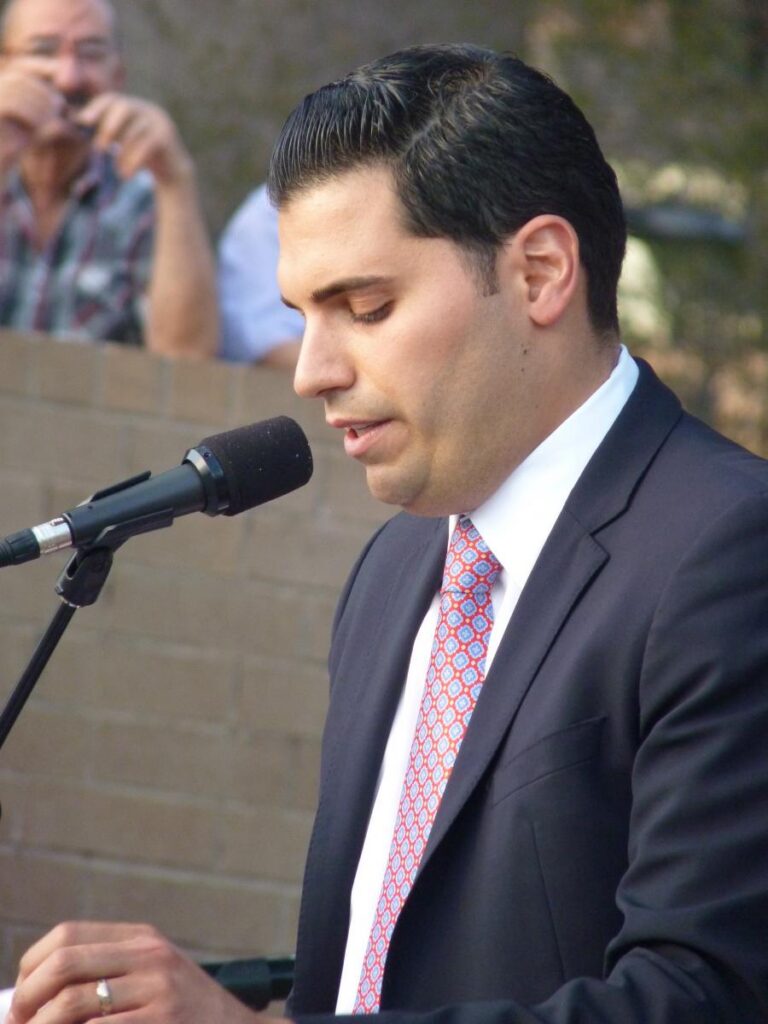
Faith leaders Mark Arabo to call for immediate release of over 27 Iraqi Chaldean Christians being held for crossing border after fleeing ISIS. July 28, 2015 (San Diego)- Since the rise of the Islamic State terrorists known as ISIS, many Iraqi Chaldean Christians have fled to neighboring countries. Some have been made it across the Mexico-US border. Now, 27 Iraqi Christian men and women have been imprisoned for over four months after fleeing ISIS. Word has come that their requests for asylum may also be denied, Mark Arabo told East County Magazine. Arabo, a leading spokesperson for Iraqi Chaldean Americans in San Diego, is calling on the immediate release of these imprisoned Christians. He has organized a service outside of the Otay Detention Center (446 Alta Road, Suite 5400, San Diego) on July 30th from 4 to 5 p.m. in a last ditch plea to release these Christian survivors on Thursday. Clergy members will be leading the faith procession with a large congregation expected to also be present. “There comes a time when we must say enough is enough,” Arabo said. “These Christians have survived ISIS, and the most unspeakable of crimes against humanity. Yet, our nation greets them from the gates of a prison. They have been imprisoned for months now, with no end in sight. We gather with our faith leaders today to join hands, and call for the immediate release of these 27 survivors.”