
A WOMAN ON THE $20 BILL?
Printer-friendly version East County News Service March 15, 2015 (San Diego’s East County)–A woman’s place is on the money. That’s the slogan of a new group called Womenon20s.org, which has launched a national campaign to put a woman’s face on the $20 bill. They’ve launched an online petition drive seeking to convince President Barack Obama to replace the image of Andrew Jackson with a woman in honor of the upcoming 100th anniversary of the 19th amendment, which gave women the right to vote. The group has also launched an online poll to let the American public choose which woman most deserves the honor of being the first female face on paper currency. Other bills feature images of George Washington, Abraham Lincoln, Alexander Hamilton and Benjamin Franklin. Andrew Jackson, a former President, is viewed as most suited to be removed from the honor of having his image on our money, since he was responsible for ordering the removal of Cherokee Indians off their land, an action that resulted in the deaths of 4,000 Cherokee people on what has become known as the Trail of Tears. U.S. law requires that only someone who has died can appear on U.S. currency. Womenon20s.org has proposed 15 candidates. These include: Susan B. Anthony , a leader in both the abolition and women’s suffrage movements, braved arrest for daring to cast a vote and campaigning for the successful passage of the 19th Amendment, giving women across America the right to vote. Anthony has previously been honored with her image on a dollar coin. Clara Barton, known as the “angel of the battlefield,” was a nurse who brought medical care to soldiers on the front lines during the Civil War. She later led national efforts to find soldiers missing in action and went on to found the American Red Cross. Rachel Carson, author of the book Silent Spring, exposed the dangers of pesticides, launching the environmental movement and leading to creation of the Environmental Protection Agency and a ban on DDT. Shirley Chisolm, the first African-American woman elected to Congress and first majority-party black candidate for President. Chisolm was a strong advocate for minorities, women and children on Capitol Hill. Betty Friedan, author of The Feminine Mystique, who also founded the National Organization for Women and served as its first president. Barbara Jordan, the first African-American from the South elected to Congress, was also the first African-American to deliver a key note speech at the Democratic National Convention. Patsy Mink was the first Asian-American in Congress and helped lead efforts to pass Title IX, legislation that ended sex discrimination in education and opened up collegiate sports opportunities for women. Rosa Parks refused to give up her bus seat to a white man, launching civil rights protests and helping to bring about passage of the Civil Rights Act. She has been hailed as a symbol in the struggle for racial equality. Alice Paul, whose 10-year campaign to win women the right to vote included a hunger strike. A lawyer and social worker, she also headed the National Women’s Party for 50 years. Francis Perkins served as U.S. Labor Secretary under President Franklin Delano Roosevelt, the first female cabinet member in American history. She introduced the Social Security Act, the Conservation Corps, the Public Works Administration, the minimum wage, the 40-hour workweek and laws outlawing child labor. Eleanor Roosevelt, First Lady and wife of President Franklin D. Roosevelt, used her newspaper column, radios and speeches to champion women’s rights and civil rights—sometimes in opposition to her husband’s policies. Later a delegate to the United Nations, she drafted the Universal Declaration of Human Rights and was nicknamed “First Lady of the World.” Margaret Sanger opened the first birth control clinic in America. She was arrested and tried for her efforts to help women avoid unwanted pregnancies, later helping to legalize contraception and found Planned Parenthood. Elizabeth Cady Stanton was a founder of the women’s rights movement, convening the 1848 Seneca Falls Convention. She inspired the suffrage movement with her words, “We hold these truths to be self-evident, that all men and women are created equal.” Sojourner Truth, an escaped slave who traveled widely advocating for abolition and women’s rights in the 19th century. Harriet Tubman, a slave who who fled to freedom in the North, later made 19 trips back to the south as a leader on the Underground Railroad, leading over 300 slaves to freedom. She also served as a nurse, a scout and a spy for the Union Army, as well as a leader in the women’s suffrage movement after the war. You can cast your vote on which of these remarkable women you would like to see on the $20 bill at www.womenon20s.org Printer-friendly version
‘A WRITER DOES NOT LEARN HOW TO WRITE…A WRITER IS BORN TO TELL STORIES’
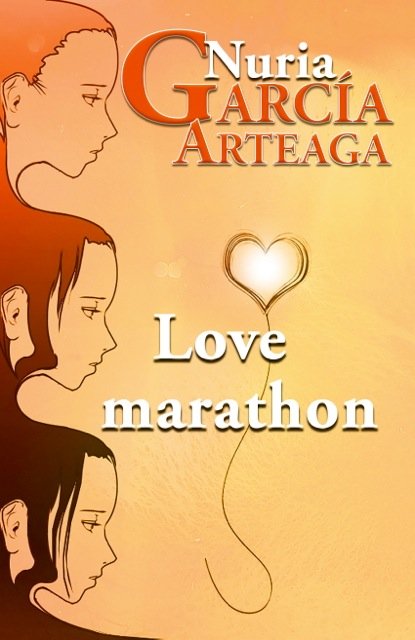
Printer-friendly version Love Marathon (“La marathon del amor”), by Nuria Garcia Arteaga (Smashwords, 2013) Book Review by Dennis Moore ‘A writer does not learn how to write … a writer is born to tell stories’ March 15, 2015 (San Diego’s East County) – Nuria Garcia Arteaga, this accomplished author and musician from Lima, Peru, now living in The Netherlands, has written and compiled a work of art that explores romance and intimacy; Love Marathon (“La maraton del amor”). Love Marathon is a trilogy that follows the lives of three women, Malucha, Maniro and Magnolia. The three women hail from disparate socioeconomic backgrounds and exemplify the novel’s epigraph: “Latin American women are like their nations, some self-destruct, others are destroyed and a few survive.” This trilogy of stories in Love Marathon; Between Drizzle and Hate, Menkori and Of Sun and Moon, captures the essence of human endeavor and frailty. The book is written in English and Spanish. Click to view video. Arteaga sets the tone for this emotional and heartfelt story by utilizing music and the theme of the epigraph throughout. The author borrows from her own early life in Lima, Peru to tell this story. She defines herself as a mix of cultures and races, with her father being African American and her mother Peruvian, and the author having the ability to speak 6 languages. This book is about women and their emotions. It is interesting to note that when I asked of the author her description and definition of love, personally, she stated: “Love is the emotional bonding with everything around you. Starting with your children, family, friends and nature! It is a force that will make you prevail when other people give up. It is the peace that you find inside, remembering the best moments of your life.” This seems a marked departure from what she has actually written in Love Marathon. Arteaga is clearly a romantic, as demonstrated in another and similar of her works; Carmen Y Cuba. Carmen lives in Holland and works in Cuba. After two decades she meets again Jean Paul, the love of her life. She shares with him a night of passion. As with Love Marathon and seemingly most of her writings, the story has a bitter-sweet ending. The author has been writing since ‘she could hold a pencil.’ At ten years old she received the second prize at a national schools competition for short tales based on the Inca culture. The pride in her culture and upbringing comes across clearly in her writings. With her musical background, this story is interspersed with her passion for musical expression, as between 1996 and 2012, Nuria had written six musicals in the framework of preventing inter-ethnic violence amongst youth in The Netherlands and to increase values and counter work corruption in Peru. As a matter of fact, one of her compositions is currently being considered by the Los Angeles Times “Festival of Books” at USC April 18th and 19th. One could easily say that music plays a big part in everything she does, including this book. She states that she listens to music when writing and makes music that could serve as background for the readers. Click here to listen to “Love Bruises.” Arteaga gives a capsulized approach to Love Marathon by starting from the childhood of these three teenage girls that meet at a former convent in Barrios Altos, colonial Lima. They become like sisters. After 5 years at boarding school, they live a while together in Lima in a house bought by Maniro’s dad. Malucha is reared by a lady from Iquitos (Amazon region of Peru) that forms her character. Her mother, Gabriela, works at a factory, she has a depressive character caused by a violent father and the loss of her mom when she was young. She never recovers from the abuse suffered from her husband. Maniro’s mother, Iraida, died at birth. Her father, Don Augusto, is from Curazao and works at passengers’ ships. Being African-Indian she is rejected by her grandma who is a racist ‘creole’. She is raised by a neighbor who is half Ashaninca (ethnic group from the amazon region). Magnolia is a love child, her mother Flora, was an orphan that married the heir of a wealthy mining family from Trujillo, north coast of Peru. Her father died in a bus accident. Untold misery and tragedy would follow these women, told in a manner by Arteaga that tugs at the heartstrings of the reader. Coming from the background that these young women came from, one would hope for a better life for them, but that was not to be the case. Perhaps this fictional story says more about the author, than that of the actual characters in the story, in that she would choose to portray them as she did. There is definitely an abundance of joy and pain in this trilogy of stories; Between Drizzle and Hate, Menkori and Of Sun and Moon. The author alludes to the violence in the lives of the central characters in Love Marathon, namely Malucha, Maniro and Magnolia, coupled with the intermittent love and intimacy in their lives. It is interesting to note that with Arteaga being a prolific writer, having also written a book entitled Intercultural Neurosis, she uses the same character of Magnolia in it, as she states: “The story presents domestic violence while living in a foreign country and being married to a Dutch executive. Magnolia has only one chance: to escape Ecuador with her two sons. Fragments of the story are presented by the author with Andes music depicts Magnolia’s grief and her determination to protect her two sons.” This is eerily similar to the plot and theme of Love Marathon. There are many plot twists in Love Marathon, (3 Shades of Love) including Malucha being murdered in a sexual encounter in Europe, Maniro committing suicide in Oslo, and Magnolia going back to Trujillo, Peru to be with her mother, after being subjected to