
EIGHT YEARS AFTER SANTANA AND GRANITE HILLS SHOOTINGS, PEACE PATROL PROGRAM TEACHES NONVIOLENCE; ROTARY AWARDS PEACEMAKER AWARD TO STUDENT EVY PONCE
Printer-friendly versionBy Miriam Raftery Evelyn Ponce, 9, receives Peace Award from La Mesa-Sunrise Rotary Club President David Roberts (Miriam Raftery) March 8, 2009 (La Mesa) — The La Mesa Sunrise Rotary chapter has presented its Peacemaker of the Year Award to Evelyn (Evy) Ponce, a nine-year-old student at Lexington Elementary School in El Cajon to honor her “outstanding work” with Peace Patrol and Bullies Beware. “She is a gifted and dedicated student with an incredible ability for peace,” said Rotary president Dave Roberts. A trainer of peace patrollers who came to America just two years ago, Ponce is now translating Primary Peacemakers lessons into Spanish and has personally intervened to prevent bullying in her neighborhood. Ponce is the first child to be honored with the annual award. Printer-friendly version
COCONUTS SPA BRINGS TOUCH OF TROPICS TO LA MESA
Printer-friendly versionBy Miriam Raftery Bob Lyon and his wife, Deedee March 8, 2009 (La Mesa) — Luau foods, seashell leis, and other touches of the tropics greeted guests at the grand opening of Coconuts Salon & Day Spa in La Mesa this weekend. Located behind the Brigantine Restaurant at 9340 Fuerte Drive, the salon formerly known as Transformations has been transformed into a tropical-themed motif by new owners Bob Lyon and Joey Atkins. "My wife, Deedee, and I came up with the name," said Lyon, sporting a Hawaiian shirt. "In the spirit of Hawaii, we created a waterfall and a whole Hawaiian motif." Printer-friendly version
WHERE’S THE PORK? NO MONEY FOR FIRE STATIONS OR FIRE PREVENTION IN SAN DIEGO’S PROPOSED STIMULUS PROJECTS
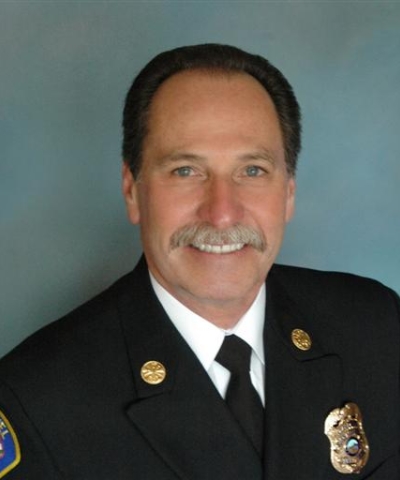
Printer-friendly version "The City and County never asked the fire departments. We are very disappointed," — August Ghio, President, San Diego Fire Chiefs Association By Miriam Raftery March 5, 2009 (San Diego)–Why didn't a city and county that have suffered through the worst wildfires in California history request funds through the federal stimulus program for any fire protection projects? The website www.stimuluswatch.org lists "shovel-ready" projects submitted by cities in the 2008 U.S. Conference of Mayors Report. There are dozens of fire-related projects such as building new fire stations, remodeling older stations, and creating training facilities for firefights in cities across the country and elsewhere in California. But none in San Diego. San Diego has nearly $351 million in projects listed, ranging from the Rose Creek Bike Path to repairing streets and upgrading street lights. But not a single fire-related project is on the list. "The City and County never asked the fire departments," August Ghio, president of the San Diego County Fire Chiefs Association, told East County Magazine in an exclusive interview. "We are very disappointed that there was no outreach to fire districts." The County Fire Chiefs Association and Fire Districts Association will be meeting with SANDAG (San Diego Association of Governments) this week in hopes of identifying some crucial fire projects, he added. "We hope it's not too late." After the devastating 2007 wildfires, Senator Diane Feinstein chaired a Congressional hearing in San Diego to investigate wildfire prevention, including local officials actions. The Senator blasted San Diego officials for failing to provide adequate fire resources for the region. "People have to understand there will eventually be loss of life on a massive scale if nothing happens." San Diego Fire Chief Tracy Jarman testified that her department lacked resources needed for rapid response time to save more homes. In Rancho Bernardo, where over 350 homes burned, the city had just one fire station protecting 24 miles. The national standard for accreditation is one station for every nine miles. San Diego needed at least 22 more fire stations to meet that standard. Jarman's predecessor, Chief Jeff Bowman, told the panel he resigned in "abject frustration" because repeated recommendations were ignored, including pleas for more fire stations and engines. City and County leaders have faulted voters for failing to pass bond initiatives for more fire funding. But now, federal stimulus dollars are available–if only City and County leaders would ask. Ghio has this message for local officials. "If you're really looking to do something good for the public, let's take advantage now to improve fire service delivery, or at least improve dramatically our regional district training." Fire districts have shovel-ready projects, Ghio said, including proposed new fire stations, replacing dilapidated stations, and building regional training centers. "There's a perfect example," he said, citing a regional training facility proposed in partnership with the Otay Water District on land that is already available. "We will open it up to Cal Fire, the U.S. Forest Service, and all of the East County and South County Fire departments–full paid and volunteer," said Ghio. The facility would also include a mobile training program to bring live fire search-and-rescue trailers to train personnel in backcountry areas. "We have tons of these things going on," Chief Ghio concluded. "But nobody asked us." Printer-friendly version
EL CAJON FIRE DEPARTMENT RECEIVES FUNDING TO ENHANCE TRAINING
Printer-friendly versionEL CAJON, Calif. (March 6, 2009)–CMR Risk & Insurance Services and Fireman’s Fund Insurance Company are teaming up to award a $6,000 grant to the El Cajon Fire Department to help fund the city’s firefighter training academy. The money will go toward instructor fees, purchasing materials, and buying necessary supplies. Each program at the academy teaches a specific function of firefighting, including Hazardous Materials First Responder, Low Angle Rescue, Confined Space Awareness, Fire Control 3, Auto Extrication, and Incident Command System. "Training our firefighters is a top priority in this department," said Fire Chief Michael Scott. "Techniques and skills are ever-changing in the fire service, and it’s critical that our rescuers learn the most up-to-date procedures and methods for safe fire operations." The grant package is part of a nationwide philanthropic program funded by Fireman’s Fund Insurance Company. The program is designed to provide needed equipment, training and educational tools to local fire departments. Since 2004, Fireman’s Fund has issued grants to over 1,100 different departments totaling more than $21 million. Independent insurance agencies that sell Fireman’s Fund products are able to direct these grants to support fire stations in their communities. CMR Risk & Insurance Services was instrumental in directing this specific one to El Cajon. "The firefighters in this community deserve the best training possible," said Bill Bodenstadt with CMR Risk & Insurance Services. "We’re happy to know this money will go toward such an important cause." Chief Scott, El Cajon firefighters, and executives from CMR Risk & Insurance Services and Fireman’s Fund teamed up at a recognition event on March 9 at the El Cajon Fire Training Facility, where the grant award was presented. Printer-friendly version
CUYAMACA COLLEGE HOSTS ITS FIRST SUSTAINABLE URBAN LANDSCAPE CONFERENCE
Printer-friendly version2-day event to be followed by plant fair open to the public March 10, 2009 (El Cajon)–Cuyamaca College is hosting a conference featuring leading landscape professionals and bus tours of eco-friendly sites Thursday and Friday, March 12 and 13, a precursor to it becoming among the first community colleges in the nation to offer a degree in sustainable urban landscaping. With the Southern California region gripped by drought and court-ordered restrictions on water deliveries from the north, water conservation has become ever more critical, so much so that it is fundamentally changing the local landscape industry, said Don Schultz, an ornamental horticulture instructor at Cuyamaca College. Mandatory water rationing is a near-certainty and most landscape professionals agree that San Diego County’s landscape design and water-management practices should move toward more conservation-minded landscapes, Schultz added. "We are introducing a new degree and certificate program in sustainable urban landscaping as an evolution of our long work in the area of water conservation," said ornamental horticulture instructor and program coordinator Brad Monroe. "The inaugural Sustainable Urban Landscape Conference will be a kickoff to the new program, which is awaiting approval by the state (community college) chancellor’s office." T he program, which will offer an associate’s degree and credentials, is expected to be in place by fall of next year. But the college isn’t waiting for the formal approval to begin offering component classes. "With the exception of a capstone class to round out the program, students can already take classes in water conservation, sustainable landscape design and such," said Monroe, adding that in his research to develop the program, he’s found that Cuyamaca is venturing into an area infrequently explored at the community college level. "Our instructors are committed to integrating sustaining concepts through every class–from floral design to irrigation classes –everyone’s on board with this." The conference opens at 8 a.m., Thursday, with Schultz providing an introduction and definition of sustainability, and continues with a daylong series of speakers in the new Cuyamaca College Communication Arts Theater. The conference will focus on the latest trends, technology and techniques for a sustainable urban landscape and is geared toward landscape professionals. With sustainable urban landscaping being A relatively new concept, the definition of sustainable urban landscapes is still being solidified. A broad definition is a landscape design and maintenance style that is environmentally sound, maintainable and conserves resources and labor. Dr. Cristina Chiriboga, interim college president, said the event affirms the OH program’s leading reputation in the landscape industry. "This is a very exciting, major event," she said. "Once again, this shows the excellence of our program and the ongoing industry leadership that program coordinator Brad Monroe and his colleagues are providing. "The intent of this conference is to bring professionals in all phases of landscape design, installation, and management together to begin establishing more sustainable urban landscapes and in the process, keep the industry viable in the face of water shortages, fires, diminishing landfill space, and rising energy costs." Co-sponsored by the Cuyamaca College Ornamental Horticulture department, the college’s botanical society, the student affiliate chapter of the American Society of Landscape Architects, the Water Conservation Garden at Cuyamaca College, and the University of California Cooperative Extension Service, the conference will include: A water agency panel discussion on water availability Fire prevention and brush clearance Plant selection for water and fire Designing for maintenance Sustainable turf management strategies Day two of the conference features more speakers from 8-9 a.m., followed by bus tours of sustainable facilities in North County, including a rainwater harvesting and recycling project at a residential site; Cottonwood Creek Park which features a swath of land called a bioswale that filters runoff water headed toward the ocean; and Temple Soleil, a private school with a campus exemplifying urban sustainable landscaping. The buses return to Cuyamaca at 4 p.m. The conference, along with Cuyamaca’s recent startup of the nation’s first community college student chapter of the influential American Society of Landscape Architects, benefits students by raising the OH program’s profile, Monroe said. As members of an affiliate chapter, Cuyamaca students have already strengthened links with the San Diego Chapter of the American Society of Landscape Architects by joining in projects such as the replanting of fire-stricken Poway Lake. Another plus is that students have the right to include the ASLA designation after their names, which tells potential clients that they’ve met membership requirements of the national association and are committed to professional standards and practices. Students also have access to networking and professional learning opportunities. As co-sponsors of next week’s conference, students are helping to organize and set up the event. Registration fees, accepted by fax, online or at the door, are $95 per person per day, or $160 for both days. Lunch is included. Fax your registration form with credit card information to (619) 660-4408 or go to www.cuyamaca.edu/ohweb/ to register online. On Saturday, March 14, the Water Conservation Garden at Cuyamaca College will host a water smart plant fair from 9 a.m. to 3 p.m. Admission is free and open to the public. In addition to sales of a large selection of plants, the fair will feature lectures by landscape designers and a county water authority representative, a book signing, and "Ask the Experts" sessions on gardening, composting, fire-resistant landscaping and more. Call (619) 660-0614, extension 10, to reserve a spot for a free, 20-minute landscape design consultation with a professional designer. There will also be a children’s activity booth and face painting, as well as drawings to win prizes, including a home landscape redesign. For more information about Cuyamaca or Grossmont colleges, including registering for eight-week courses beginning March 23, go to www.cuyamaca.edu , www.grossmont.edu , or www.gcccd.edu. Online applications and registration are available. Printer-friendly version
SANTREE FEST AND EARTH DAY CELEBRATION MARCH 14
Printer-friendly versionMarch 10, 2009 (Santee)–Santee invites the public to participate in "SanTree Fest," an Earth Day celebration from 9:45 a.m. to 1 p.m. on Saturday, March 14th at Mast Park, located at 9125 Carlton Hills Blvd. Festivities begin at 9:45 with a nature walk departing from a trail entrance at the northwest side of the Wal-Mart parking lot. A community tree planting event follows at 10:15. Live bluegrass music by Virtual Strangers, kids’ crafts, pot-a-plant with Lowe’s, environmental and informational booths will also be available. In addition, local restaurants will provide samples of healthy foods–all free! Park at Carlton Hills Elementary or Wal-Mart, as there is no parking onsite. Participants in tree planting and the river park cleanup must sign a waiver (or have a parent/guardian sign for those under 18. Waivers are available onsite or at the Santee website. More Info: http://www.ci.santee.ca.us/Index.aspx?page =8&recordid=656 Printer-friendly version